
If you spend enough time in Cádiz, you’ll notice that Hercules keeps popping up. In statues. In symbols. In stories locals casually drop, as if it’s perfectly normal that a Greek demigod once wandered through southern Spain. Around here, Hercules isn’t just myth—he’s practically a former resident.
Cádiz isn’t just one of the oldest cities in Europe; it sits right where the ancient world believed the known world ended. And when you’re talking about edges, monsters, and impossible tasks… you’re firmly in Hercules territory. One of his most famous labours—stealing the golden apples of immortality—may not have happened in some vague, far-off fantasy land, but right here. Some say Morocco near the Atlas Mountains; others (cough cough, me) say the Costa de la Luz—Cádiz and Huelva.
And those golden apples weren’t just magical fruit. They were guarded by nymphs, a hundred-headed dragon, and a goddess who really didn’t want humans touching her stuff.
Okay, okay—I’m getting ahead of myself.
Let’s start from the beginning.
The Story
When the Greek goddess Hera married her husband, the god Zeus, she was given the golden, immortal-granting apples by Gaia. Not wanting mortal man to get his hands on this special gift, Hera kept them in an orchard in her secret garden, known as the Garden of the Hesperides.
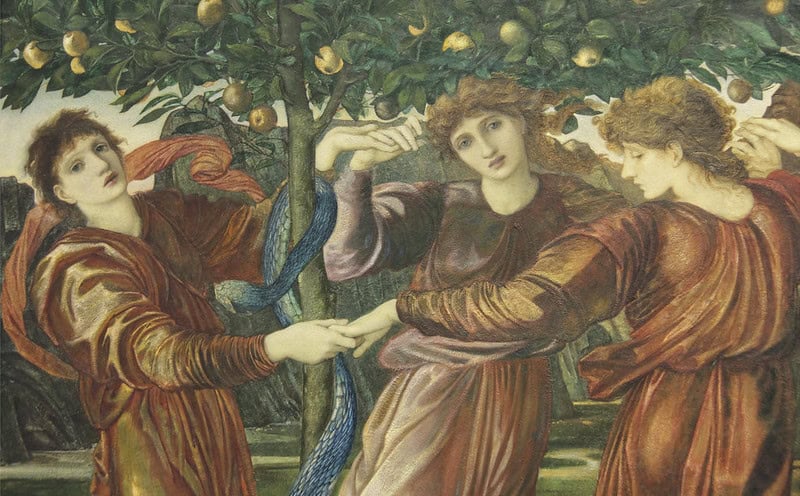
There, the daughters of Atlas—often called the Hesperides, or individually the nymphs who represented the golden light of dawn and sunset (Aegle, Erytheia, Hesperethusa/Hesperia)—kept guard over the orchard alongside the hundred-headed dragon, Ladon. Casual.
This garden was supposedly located far, far away—past the edge of the known world. And as mentioned before, we know exactly what the ancient world considered beyond the known world… Cádiz.
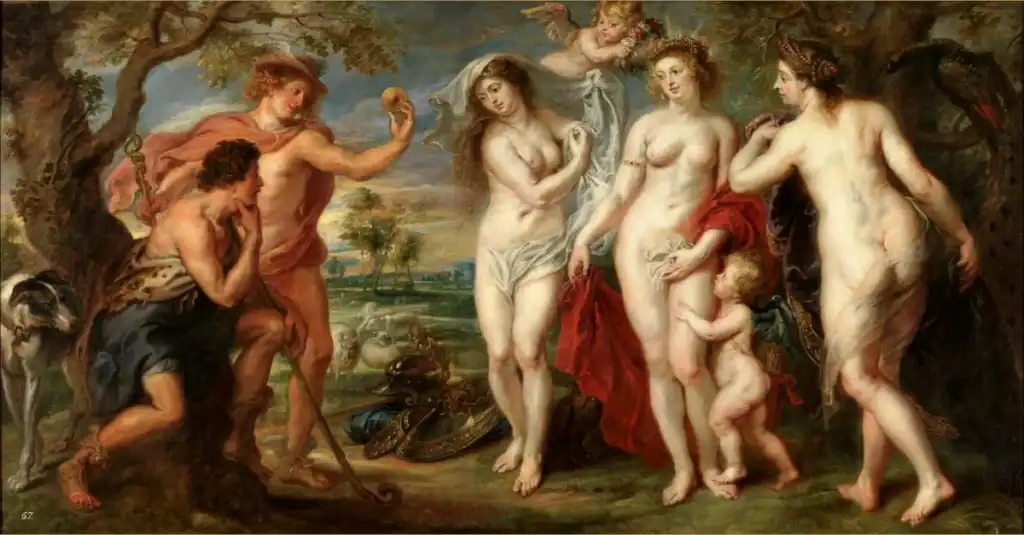
If these apples sound familiar, it’s because they’re the same golden apples that later caused total chaos as the ‘Apple of Discord’—the very ones that kicked off the Trojan War. Short story: Eris (Goddess of Strife) got pissy because she wasn’t invited to a wedding, so to stir up trouble she threw an apple marked “to the fairest.” This, of course, triggered a classic “who’s prettier” jealousy fight between the top three goddesses—Hera, Athena, and Aphrodite.
Poor Paris of Troy got appointed as judge, and although all three goddesses tried to bribe him, he picked the “gift” he liked most: Helen of Sparta. (Because sure, just give someone a whole person—why not?) Naturally, Paris assumed she was now his, abducted her, and voilà: the Trojan War ignited.
Anyways, I digress back to Hercules´ 11th labour.
To set the scene, here’s a little background: Hercules had to complete 12 labours because he slaughtered his own wife and children. Story goes, Hera drove him insane, so technically he didn’t do it intentionally. Not exactly the Disney version we all grew up with.
Either way, to atone for his actions he had to go through catharsis, or cleansing rites, which were only given by kings or the gods. Hera decreed that King Eurystheus—ruler of Mycenae and Tiryns (and not exactly the heroic type; most people didn’t like him, he was kind of whiny and terrified of Hercules)—had to assign him 10 labours. Hercules ended up having to do 12 because “they” claimed he cheated on two of them. Classic.
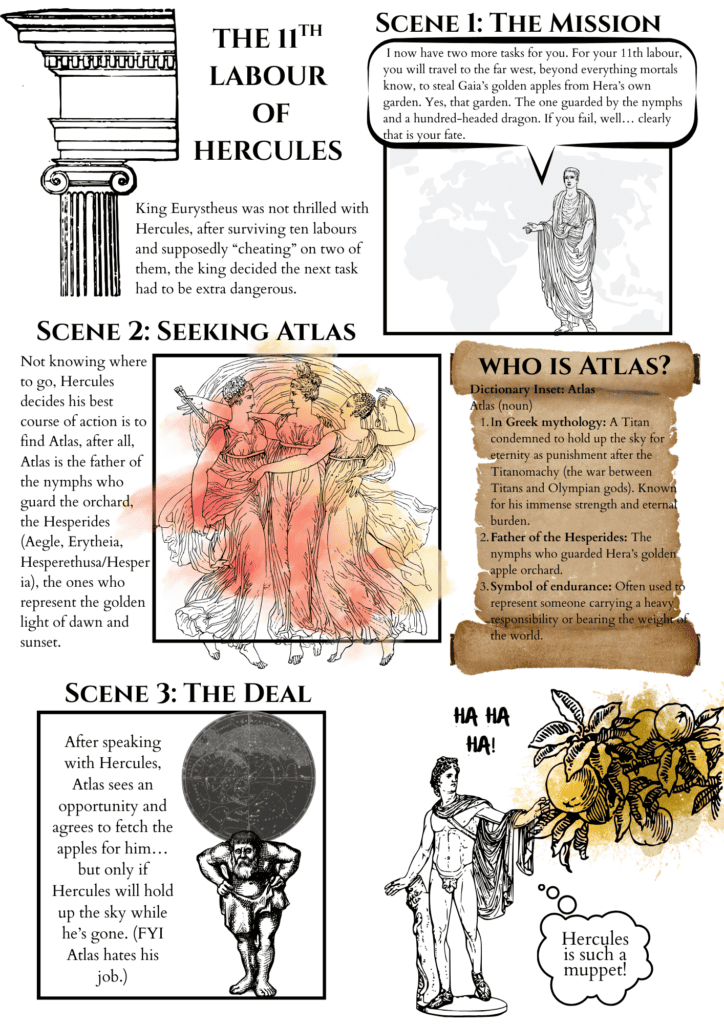
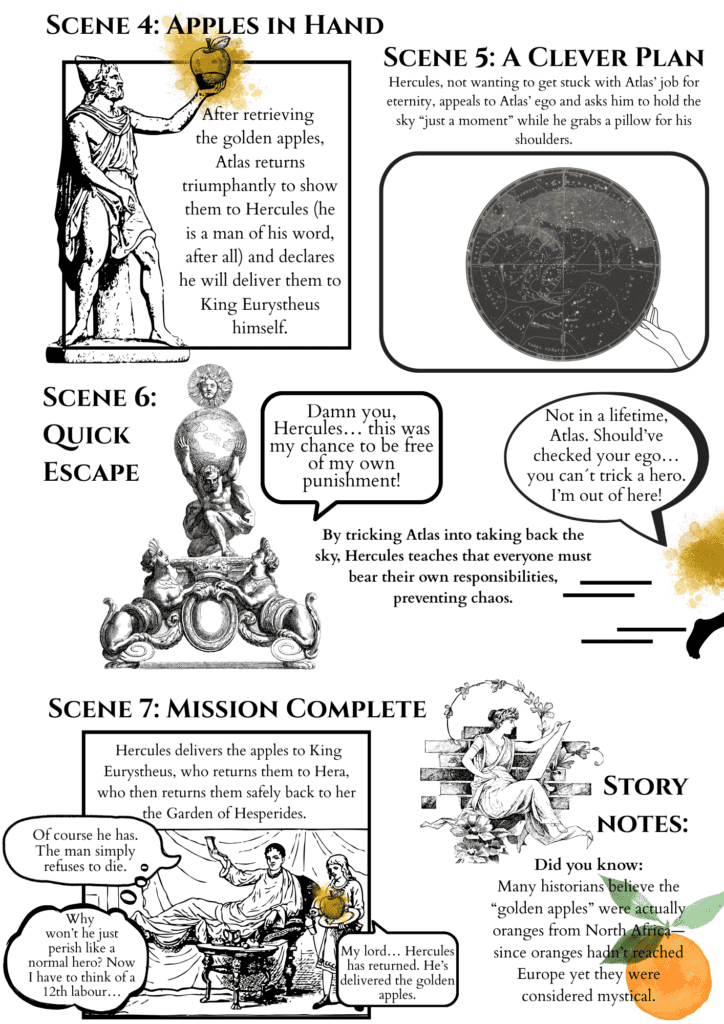
So, his 11th labour was supposed to be quite tricky: he had to steal the golden apples that had been gifted to Hera by Gaia.
The Story of Hercules 11th Labour
If you liked this story and want more myth, history, and mischief straight from Cádiz, make sure to subscribe to our newsletter.
✨ Ready to explore Cádiz like a local? Check out our guided walking, bike tours or Tapa & Sherry experience today!
Read next:





0 Comments