
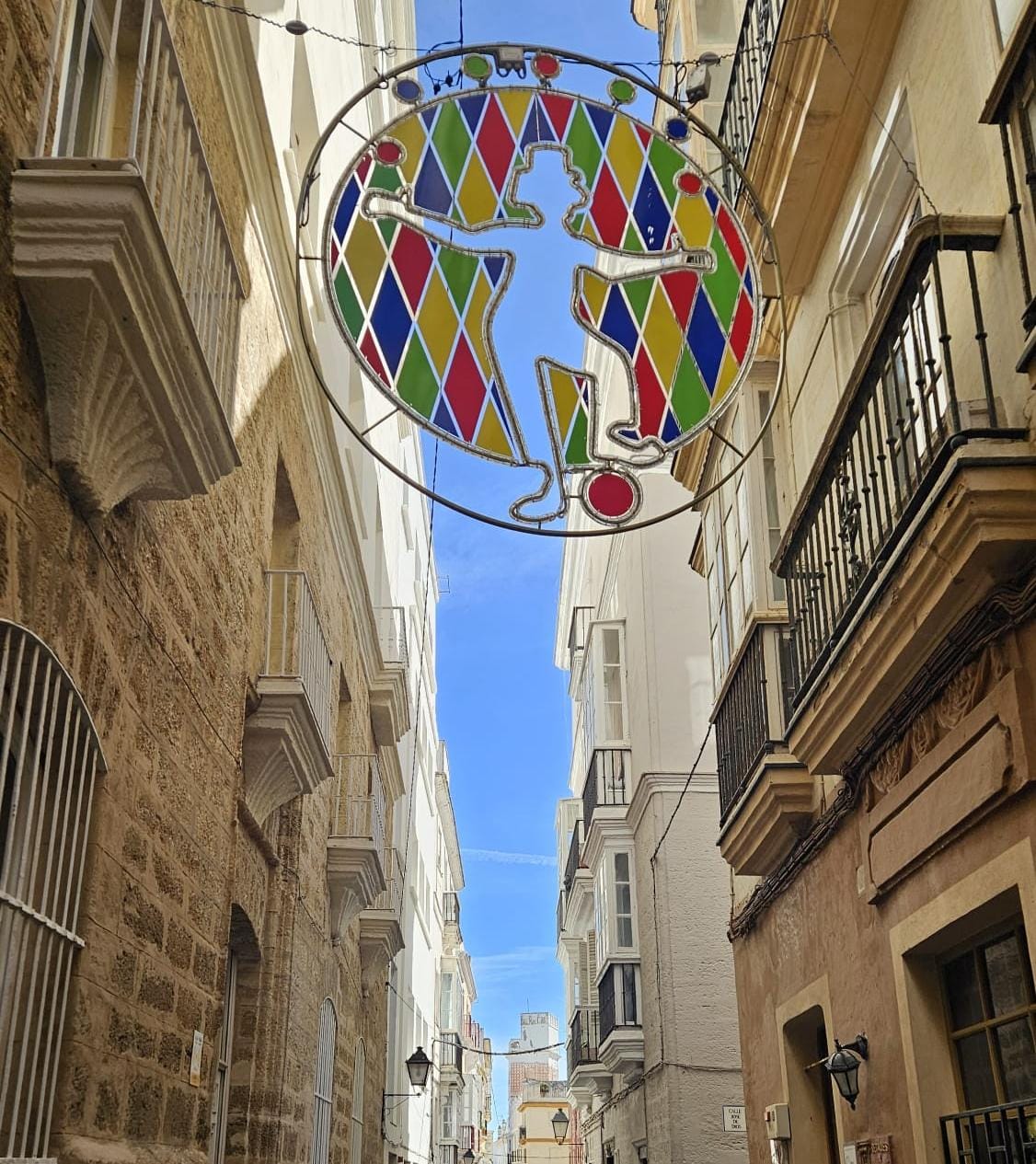
It’s almost February, which means Carnival is just around the corner! This is one of the most anticipated celebrations of the year in Cádiz and throughout the province, with Cádiz Carnival standing out as one of the most unique in Spain. Carnival marks the unofficial end of winter and the joyful slide into spring with music, satire, costumes, and zero shame.
For those unfamiliar with it, Carnival takes place in the days leading up to Lent, the 40-day period of fasting and reflection before Holy Week (Semana Santa) and Easter. Traditionally, it was a time to indulge in excess — food, drink, and behavior — before the more restrictive season of Lent began.
While Carnival is now tied to the Catholic calendar, its roots go much further back. The celebration evolved from pagan festivals that marked seasonal transitions, fertility, and the end of winter. When Christianity spread, the Church adapted these popular celebrations rather than eliminating them — and voilà, Carnival was born.
In Cádiz, Carnival has its own personality: sharp humor, political satire, music, and a city-wide commitment to not taking life too seriously… at least for a couple of weeks.
1. Go to the Pre-Carnival Food Festivals (Fiestas Gastronómicas)
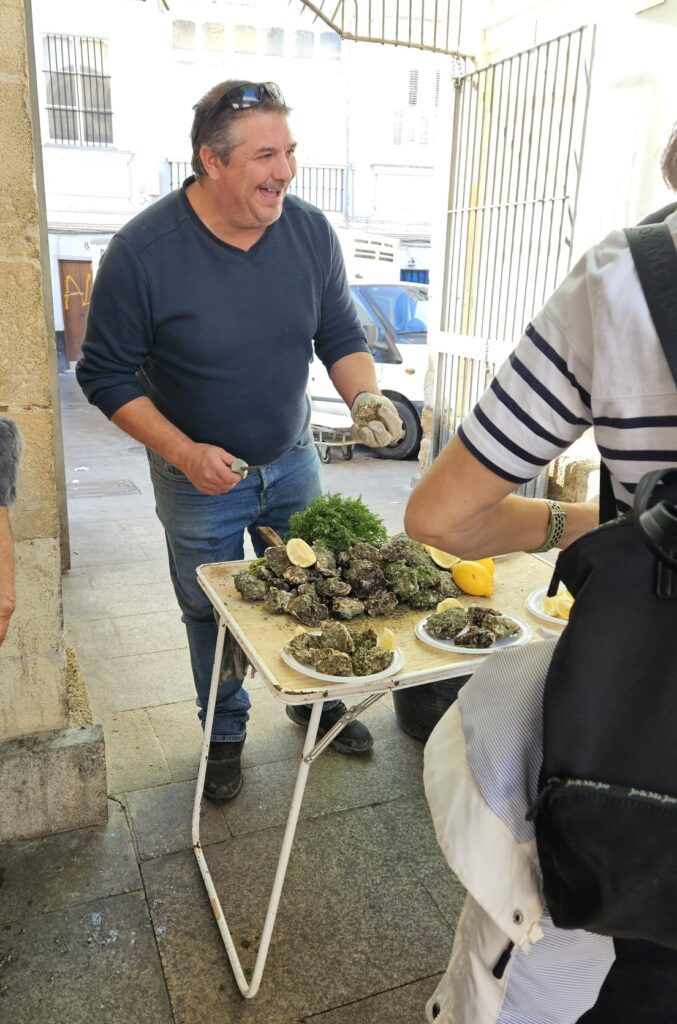
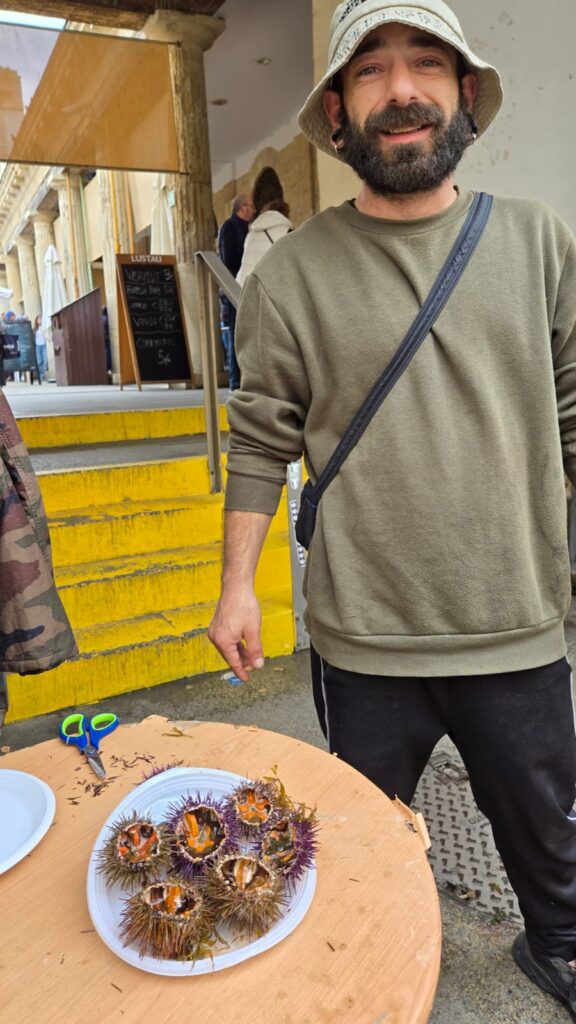
Before Cadíz Carnival officially kicks off, the town starts warming up its engines and its stomach. One of the absolute must-dos is attending the traditional fiestas gastronómicas.
These include popular public tastings like La Erizada (sea urchins), La Ostionada (oysters), and La Pestiñada (sweet pastries), where locals gather to eat, drink, and celebrate at very affordable prices.
These events are considered pre-Carnival festivities, designed to get the city in the mood before the main party begins. They usually take place on Sundays, starting in mid-January and continuing every weekend until Carnival officially begins.
Think of them as Cádiz doing what Cádiz does best:
eating well, drinking happily, and easing into chaos, slowly and deliciously.
2. You Must Dress Up (Yes, You Too)


Dressing up is non-negotiable during Carnival. In Cádiz, it’s very common to go out in group costumes, usually centered around a shared theme — the funnier or more ridiculous, the better.
Not really a “costume person”? No problem. Cádiz has you covered with the lazy costume:
Just paint two red dots on your cheeks and boom — you’re officially participating.
No excuses. No pressure. Just join the fun. Carnival is not about looking perfect; it’s about laughing at yourself and being part of the madness.
3. Drink Like a Local (At Least Once)
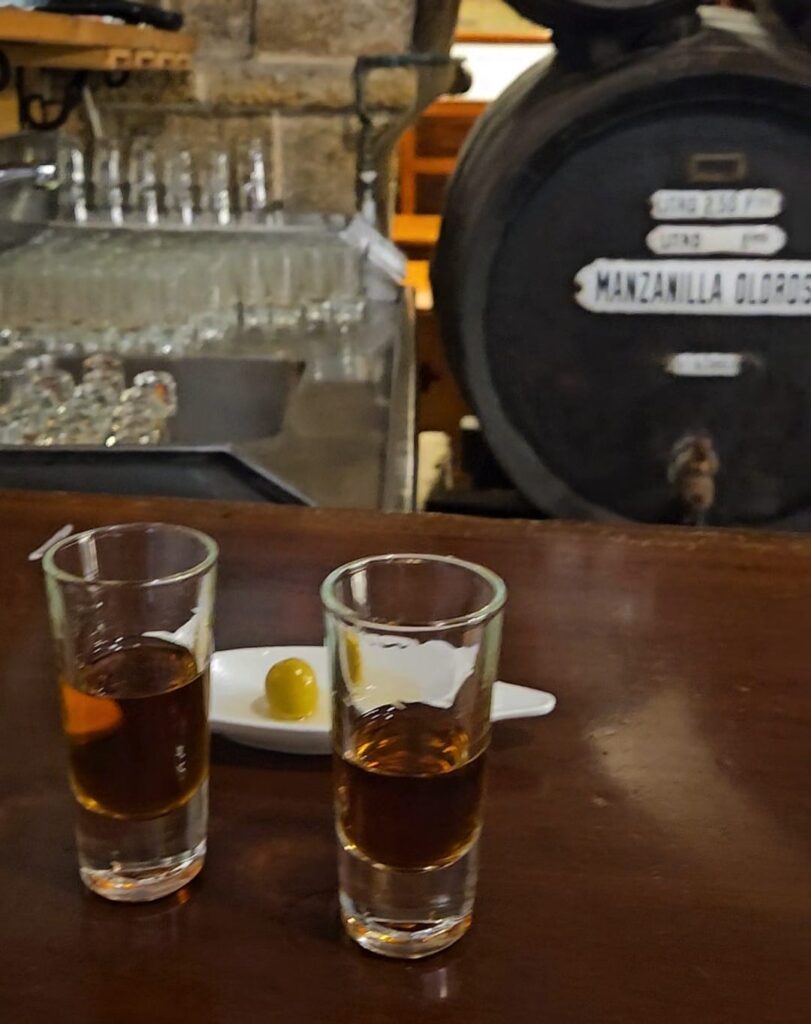
As you wander the streets soaking up the Carnival madness, you’ll notice people drinking one thing more than anything else: Manzanilla or Fino.
It’s the most traditional local drink and a staple in the small tascas of the historic center.
If straight Manzanilla (or Fino) feels a bit intense, no worries, water it down with a splash of Sprite, and you’ve got a Rebujito. It’s light, refreshing, and usually served in big jugs during the day, especially when the sun is out.
Prefer something sweet? This is the one time of year I personally enjoy a glass of Moscatel — a sweet wine that pairs perfectly with traditional Carnival desserts. And listen, if you’re not a sherry drinker, that’s totally fine… although I do encourage you to join the local population and try at least a little.
*Pro tip: Pass by Taberna Manzanilla and have a glass of sherry
And if wine is really not your thing, relax. There’s plenty of beer. During Carnival weekend, the entire city basically turns into one giant open-air bar, with beer flowing in the streets and in every tapas bar you pass.
4. Head to La Viña & Catch the “Illegal” Groups
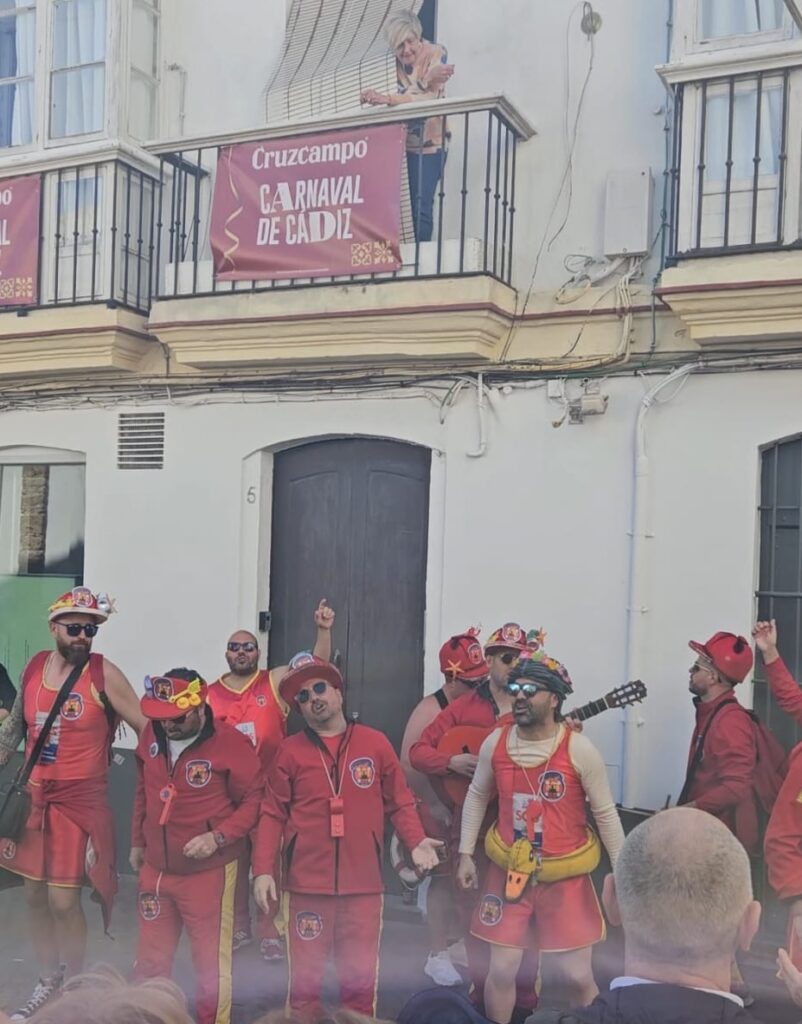
One of the most authentic Cadíz Carnival experiences is wandering through the La Viña neighborhood — especially along Calle Virgen de la Palma.
This is where you’ll hear the famous “illegal” chirigotas (chirigotas callejeras): unofficial groups that sing spontaneous, uncensored, and often brutally funny songs in the streets. No stage, no schedule, just sharp humor and quick wit — and honestly, this is where some of the best Carnival moments happen.
While you’re at it, don’t miss the Carrusel de Coros (Choir floats). Watch the bateas (decorated floats) roll through the Plaza de Abastos and Plaza de las Flores, with the coros singing their tangos as they pass. It’s loud, joyful, and pure Cádiz.
Bonus Tip: A Little Local Wisdom
- Wear comfortable shoes — cobblestones + hours = regret
- Don’t plan tight schedules; Carnival runs on its own timeline
- Key: Make sure you have an exit strategy.
- If you hear singing, stop walking — you’ve found the good stuff
5. Witness the Burning of Momo… or La Bruja Piti

To mark the symbolic end of Carnival and the beginning of Lent (Cuaresma), Cádiz burns El Dios Momo on Tuesday night. This ritual represents saying goodbye to excess, laughter, and indulgence… at least on paper.
That said, contrary to tradition, Carnival in Cádiz does NOT actually end here.
The festivities continue until the last Sunday, when La Bruja Piti (the Carnival witch) is burned, officially bringing Carnival to a close.
Want to dive deeper? Read our full blog post on Cádiz Carnival traditions, where we break down the stories of God Momo and La Bruja Piti. Read our full blog post on Cádiz Carnaval: Discover the Stories of God Momo & Witch Piti
Carnival in CádizWant to keep exploring Cádiz beyond Carnival?
Take a look at our local tours or join our newsletter for insider stories, traditions, and events — straight from Cádiz.



0 Comments