Cádiz is Spain’s oldest continuously inhabited city, which in layman’s terms means it’s a place built on layers of history. Some treasures sit in full view, others lie buried beneath centuries of urban life, and some may stay hidden forever. Now, despite the city being very, very old, it isn’t until recent years that its history and artifacts finally getting the global clout they deserve (AMNiveauCPAUGR32.pdf).
As the city of Cádiz has grown over the years, archaeological discoveries have popped up like unwanted weeds or unexpected treasure chests not always in a linear fashion, making it difficult to sometimes understand what exactly is being uncovered. Due to the gaps in knowledge and the lack of understanding of some of the civilizations that lived here long before us, we tend to interpret history through our own modern lens, patching ancient mysteries with modern assumptions, like slapping duct tape on a 3,000-year-old puzzle (Vita360.org).
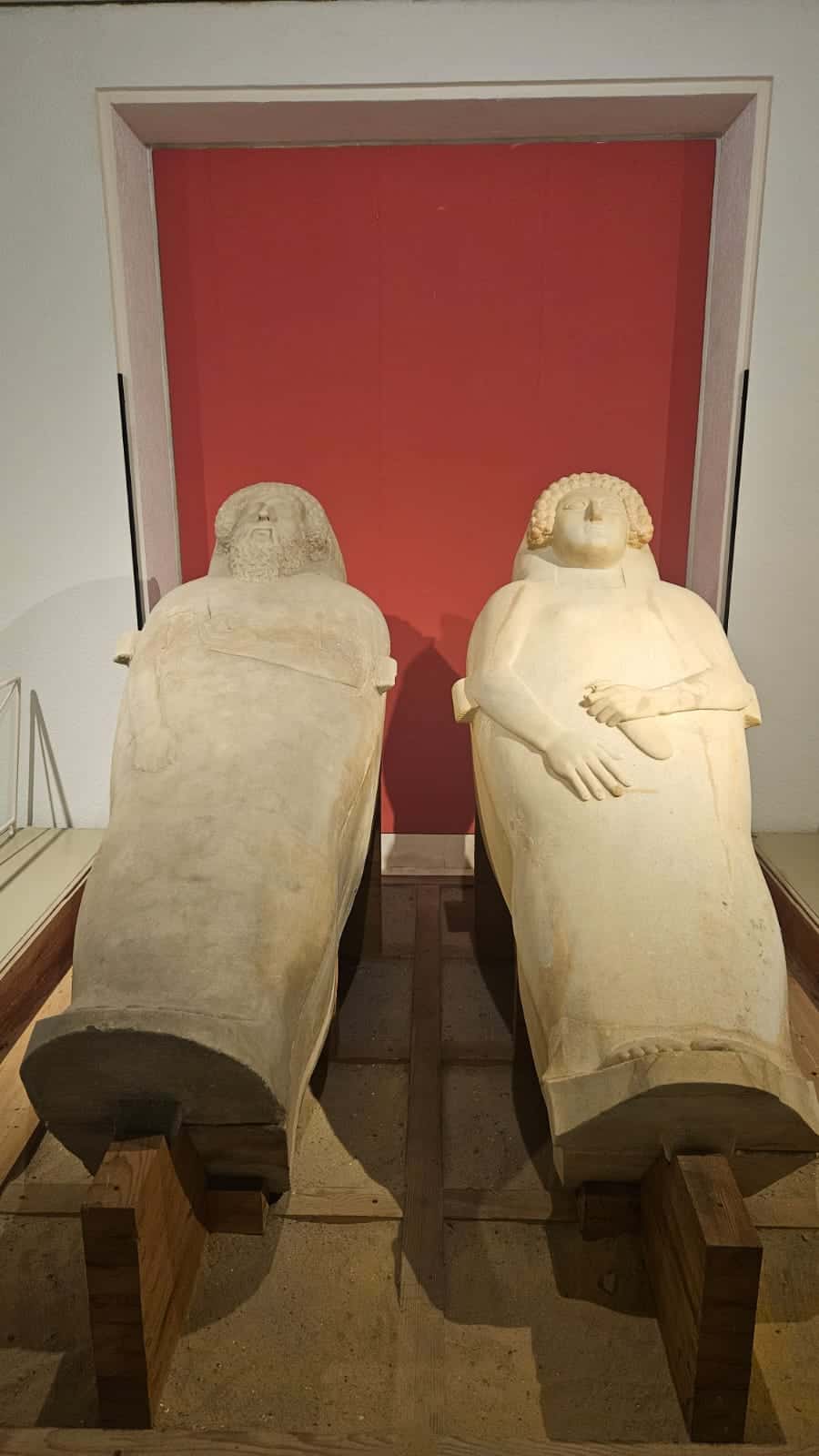
I bring this up because one of my favorite discoveries made in Cádiz is a textbook case of us humans thinking we know more than we do. Today, if you visit the Museum of Cádiz, you’ll be presented with a pair of Phoenician marble sarcophagi. These ancient tombs aren’t just remarkable for their age or craftsmanship (which, in my opinion, are way too underrated), fabulous and famous in their own right, but for many years they were misunderstood. And even today, although we have a clearer picture thanks to research and a deeper understanding of the culture they came from, there is still much to learn.
So let’s dive into it… plus the story is a bit wild and one that took nearly a century to complete.
The Male Sarcophagus: A 5th-Century BC Masterpiece
In 1887, during preparations for the International Maritime Exhibition, workers at Punta de la Vaca (on the north side of the old city) (Sarcfagosaccepted.pdf)
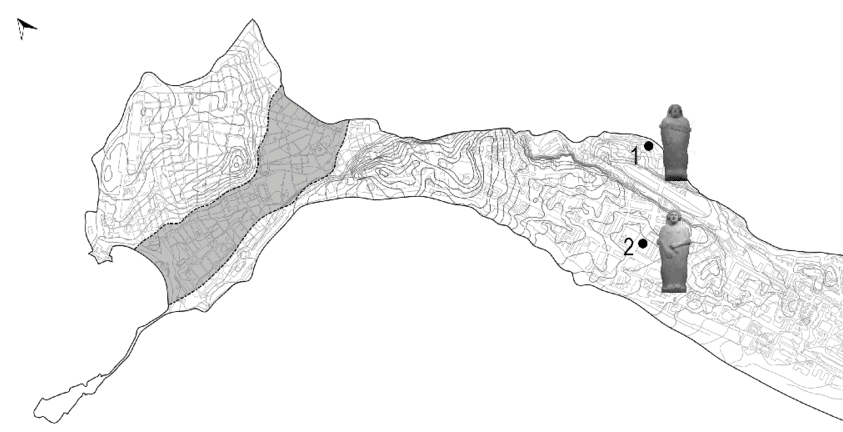
uncovered a necropolis about five meters underground. Most of the grave goods quietly “dissapearedf” into private collections (classic Cádiz), but one tomb revealed a find of global proportions: a male anthropoid sarcophagus carved from white marble, dated to around 480–450 BC.
This thing is a beast—over two tons of marble drama, measuring 219 × 82 × 84 cm, carved with absurdly fine detail. You don’t make something like this unless you’re honoring someone important… or you’re showing off. Possibly both. (Sarcfagosaccepted.pdf)
Notable features
- He reclines wearing an Egyptian-style headdress or possibly a Greek or Phoenician-style crown, once painted with flowers, paired with a perfectly curled beard. It’s the only known Phoenician sarcophagus with both a beard and arms, making him the ancient equivalent of a rare Pokémon. (Sarcfagosaccepted.pdf)
- His hooked curls trace a stylistic journey Syria → Cyprus → Phoenicia, refined through Ionian-Cypriot influence. The way his hair and beard are carved shows a blend of Phoenician tradition with Greek classical flair, especially reminiscent of Alkamenes’ Hermes Propylaios (a famous greek sculpture who created a classic Greek Hermes statue head). (AMNiveauCPAUGR32.pdf)

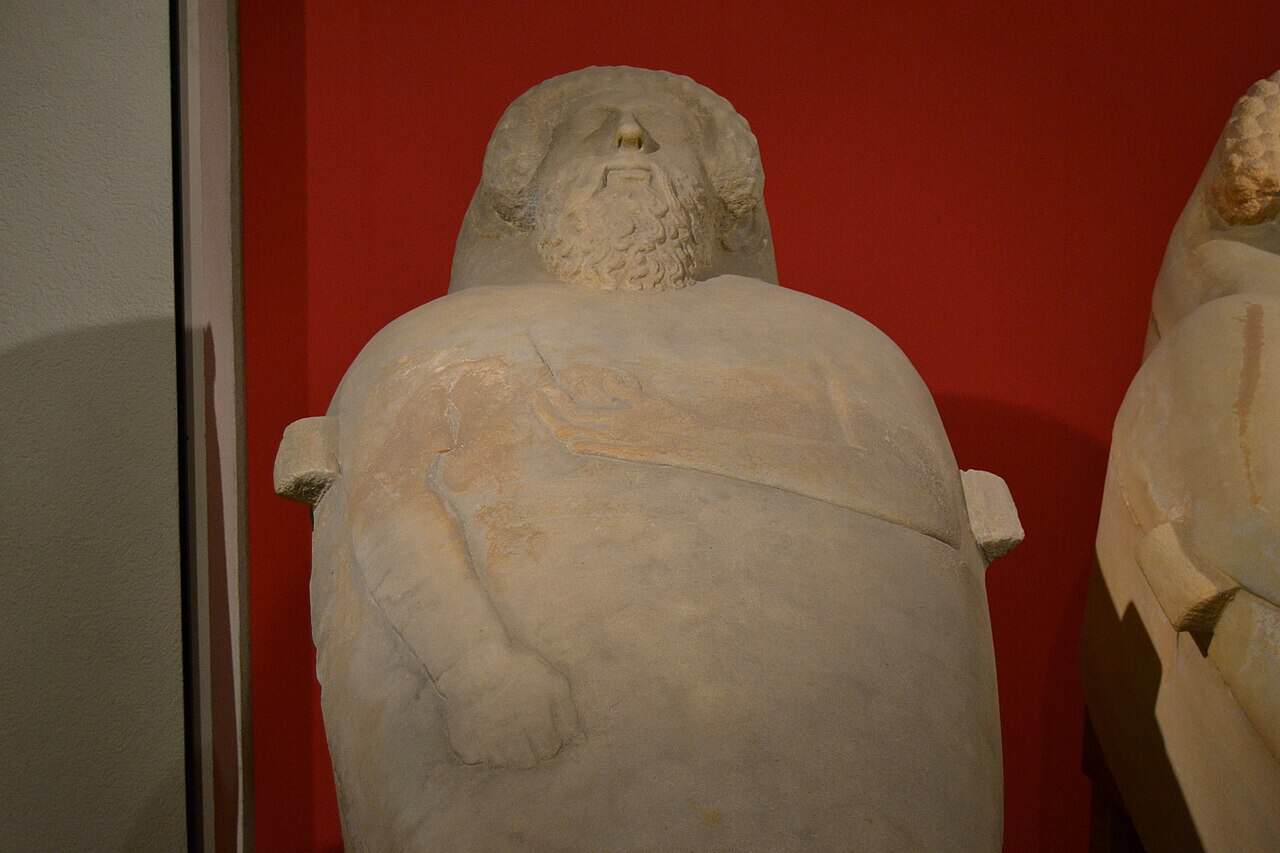
- His right arm bends at a right angle and originally held a laurel crown (now lost). Translation: the ancient symbol of power, authority, or “I’m kind of a big deal.”
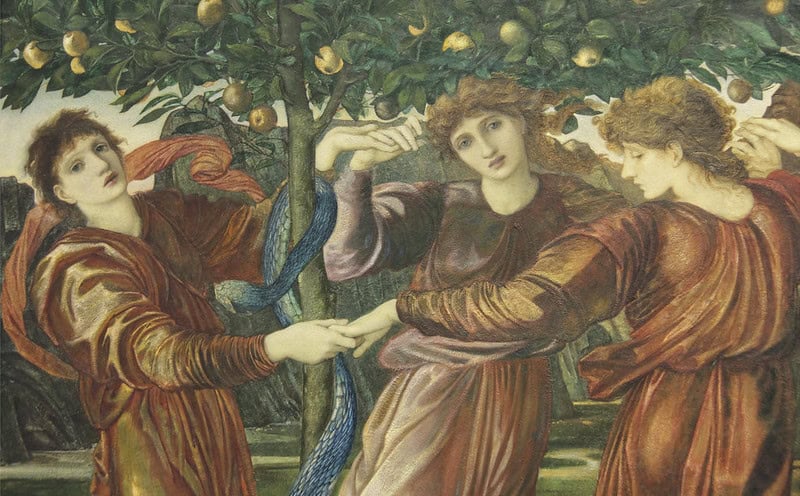
- His left hand holds a circular fruit, likely a pomegranate, a powerhouse symbol of rebirth and eternity for both Egyptians and Greeks (Pomegranates of Ancient Egypt). Or, if you prefer the mythic angle, it could be a nod to the Hesperides’ golden apple, the one Hercules had to snatch in his 11th labor. To read up on that story check out our blog on The 11th Labour: Hercules vs. The Garden of the Hesperides.
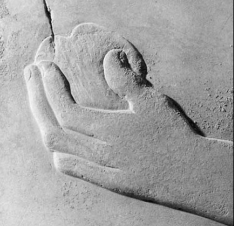
- Four fingers are carved with insane precision, complete with tiny semicircular cuts showing fingernails. Someone was flexing.
- His bare feet rest on a pedestal, and the dramatically separated big toe suggests he once wore painted sandals, a detail so subtle it borders on smug craftsmanship.
Sadly, the necropolis this masterpiece came from was completely destroyed in 1947 by a naval explosion, taking with it anything that may have given us further clues on these exceptional finds. (Sarcfagosaccepted.pdf)
Pelayo Quintero Atauri: The Dream of a Lady
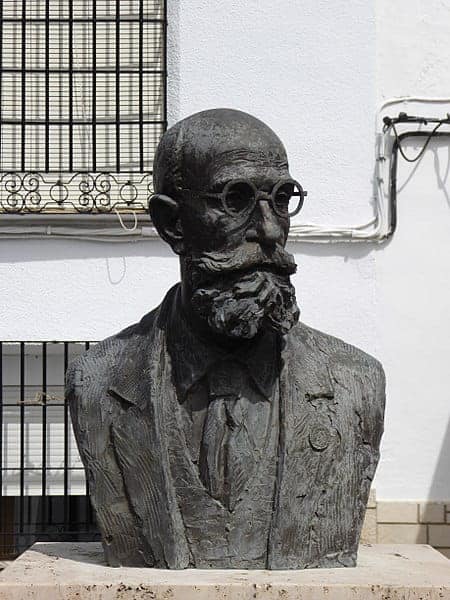
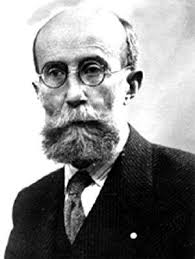
In 1904, archaeologist Pelayo Quintero Atauri arrived in Cádiz and immediately fell in love with its ancient ruins. He directed excavations, taught at the School of Arts and Crafts, and eventually ran the Provincial Museum (Vita360.org). Much of his career was spent studying the Phoenician and Roman necropolises of Cádiz, recovering artifacts that today form the core of the Archaeological Museum’s collection. In truth, Cádiz’s Phoenician collection exists largely thanks to his stubborn dedication (Sarcfagosaccepted.pdf).
But one mystery consumed him more than any other. After studying the male sarcophagus, Quintero became convinced it must have once had a counterpart, a female sarcophagus.
Spanish newspapers began calling this hypothetical piece La Dama de Cádiz, the Lady of Cádiz. Quintero spent years searching for her, driven by scholarly conviction… and honestly, a bit of spiritual obsession. In his notes, he described seeing her in dreams and hearing her call to him from beneath the ancient city (Diario de Cádiz,Fotograrte Blog).
Despite decades of exploration, Quintero retired without ever finding her. He left Cádiz in 1939 and eventually passed away in 1947, still haunted by the vision of the lady who spoke to him in his sleep.
Which makes what happened next… almost painfully ironic.
The Lady of Cádiz: Found a Century Later
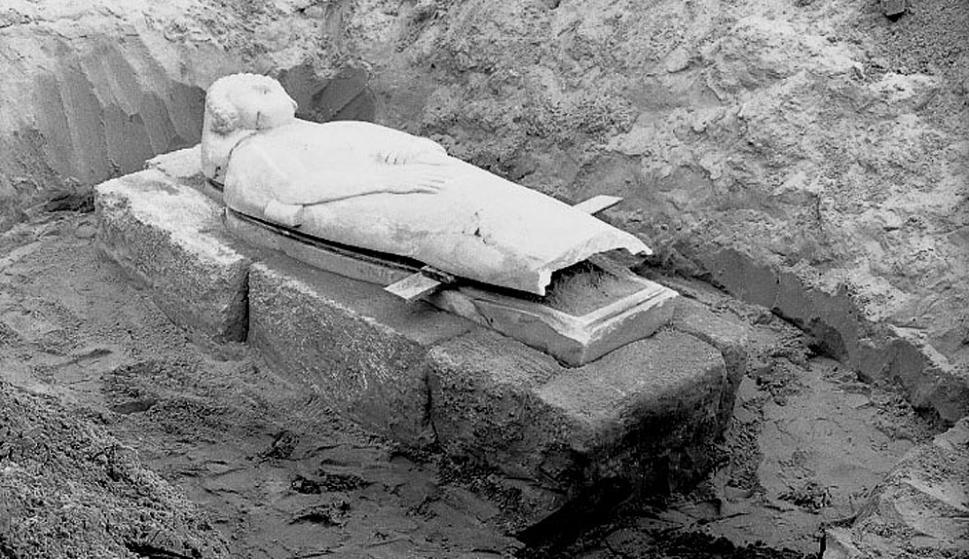
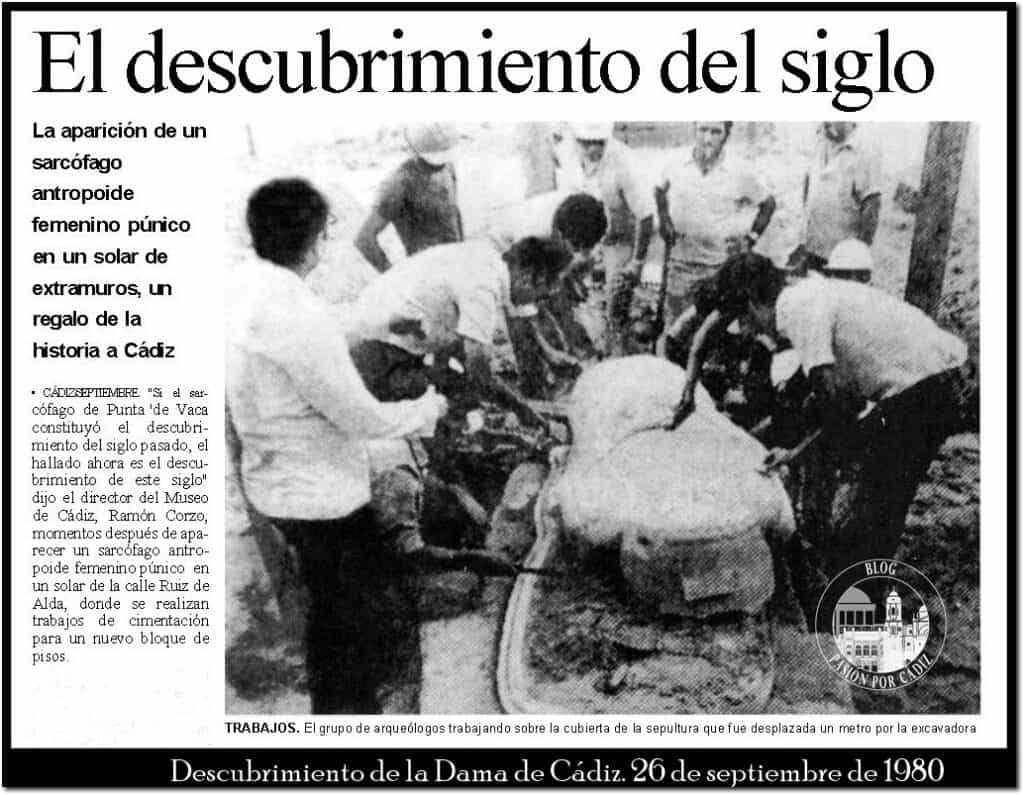
On September 26, 1980, during construction work on Calle Ruiz de Alda, a machine operator stumbled upon the stones covering the sarcophagus and exclaimed, “Now this was one beautiful lady,” and just like that, to everyone’s surprise, a second anthropoid sarcophagus was uncovered(Lavanguardia, Guía de Cádiz, Fotograrte Blog). It dated to around 470 BC, making it older than the male discovered 93 years earlier by about 70 years (Sarcfagosaccepted.pdf).
And the location?
Go ahead, guess. I bet you won’t get it.
It was buried under a palm tree in the garden of none other than Pelayo Quintero’s chalet, casually waiting there to be discovered.
History has a wicked sense of irony.
Notable features:
- The sarcophagus is carved as a serene young woman, with remnants of paint still visible.
- Her left hand holds an alabastron, a perfume vessel symbolizing luxury and elite status. This alabastron is one of the oldest and finest examples of such carving in the Mediterranean (Sarcfagosaccepted.pdf, AMNiveauCPAUGR32.pdf).
- Her right hand lies open, with the same detailed treatment of nails and knuckles seen on the feet and on the male sarcophagus.
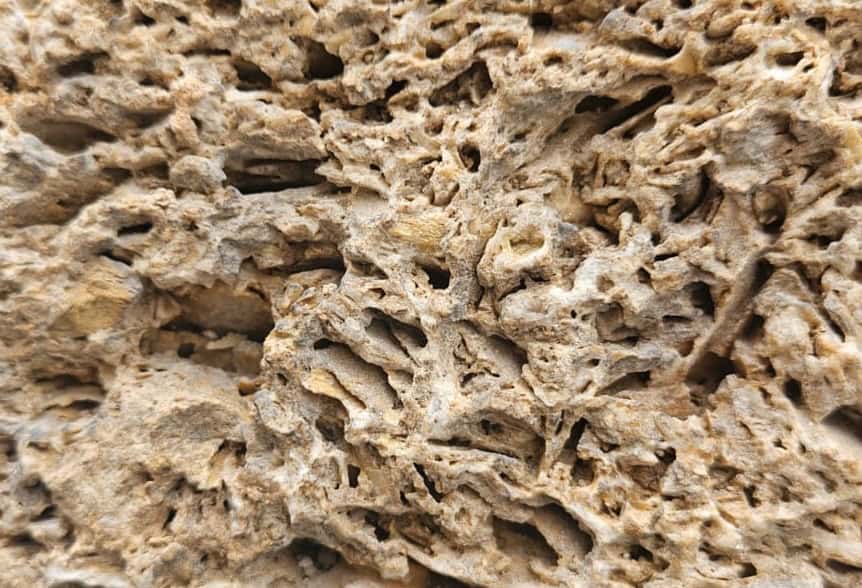
- The tomb chamber itself was constructed from local ostionera stone (a very porous sedimentary rock made from seashells and eroded marine stones), precisely cut to cradle the sarcophagus (Los_sarcofagos_antropoides_de_la_necropo.pdf).
- Inside were amulets, bronze eyelashes, a scarab, and other funerary items.
Now the city finally had their two sarcophagi reunited in the Museum of Cádiz. They brought closure to the legendary obsession of Pelayo Quintero, who never found the female…
But that’s not the end of the story… the drama continues…
The Plot Twist No One Saw Coming
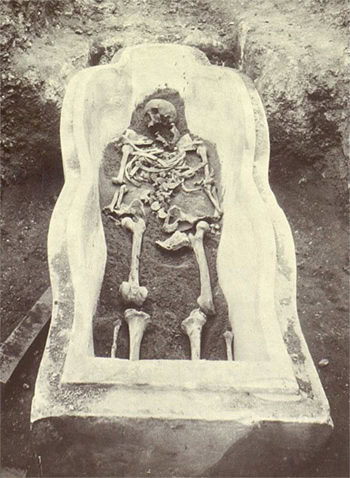
Neither the inhabitants of the male nor the female sarcophagus are represented by the image carved on their resting places (AMNiveauCPAUGR32.pdf). About a decade later, researchers at the University of Cádiz, after extensive DNA and osteological studies, confirmed that “the Lady of Cádiz” was not a female body — but actually a man (Lavanguardia, Guía de Cádiz).
He was around 45–50 years old, robustly built, and approximately 1.68–1.72 meters tall (which is surprisingly tall for the era).
And, come to find out the body in the male sarcophagus was also labeled incorrectly. In the first several decades it was at the museum, the original skull was accidentally damaged, leading to the skeleton being swapped out sometime in the 1920s (Sarcfagosaccepted.pdf). It wasn’t until later that the original skeleton was rediscovered , and when re-examined, it debunked the very first scientific study from February 1890, which claimed it belonged to a man roughly 1.65 m tall, short in stature but from the upper social classes (AMNiveauCPAUGR32.pdf).
That was wrong. It wasn’t a short man at all — it was a woman.
So the male sarcophagus held a female…
…and the female sarcophagus held a male.
History: 2
Assumptions: 0
When scientists were questioned about why this information wasn’t publicized, they downplayed it by saying the contents of the sarcophagi “weren’t that important.”
(Cough cough, personally, I think they were embarrassed they’d been so confused. But to be fair, the 1980s was a big decade of discoveries in the province of Cádiz, a LOT was coming out of the ground, and fast.)
Why These Sarcophagi Matter
These two sarcophagi, the only ones of their kind ever found in Spain, mark the far western edge of Phoenician influence (Sarcfagosaccepted.pdf, Los_sarcofagos_antropoides_de_la_necropo.pdf). Their style places them firmly within an Eastern Mediterranean tradition, yet their presence in Cádiz proves just how deeply this city was plugged into the ancient world.
For decades, no one knew where the marble came from. There was a whole academic soap opera about it. But recently, isotopic and petrographic analyses led by Pilar Lapuente and her team cracked the case. The stone wasn’t Iberian at all, it came from the eastern Mediterranean, most likely the famed quarries of Paros in the Cyclades (AMNiveauCPAUGR32.pdf).
That means these sarcophagi were carved abroad, probably in Sidon or Tyre, and shipped all the way to Gadir. In other words: Cádiz wasn’t some sleepy western outpost, it was part of a high-powered Mediterranean trade network that moved luxury goods, ideas, and apparently, very fancy coffins.
Influenced by Egyptian burial traditions and executed by Greek artists (Sarcfagosaccepted.pdf), these pieces represent a cultural mash-up that only a Phoenician port city could pull off.
What they tell us is even better:
Cádiz played a much larger role in Phoenician trade and cultural exchange than scholars once assumed (Los_sarcofagos_antropoides_de_la_necropo.pdf).
Elite Phoenician burials prioritized symbolism, not physical likeness.
These sarcophagi were luxury imports, pre-made, shipped by sea, and purchased by families with serious money.
The faces on the lids had nothing to do with the people inside them.
Another key detail: the face on the so-called male sarcophagus isn’t a portrait. None of these lids were intended to depict the dead, they’re idealized guides meant to escort the soul into the afterlife.
These two pieces are extraordinary not only for their beauty but because:
- They are the only examples of their kind ever found in Spain.
- They are unique in Europe, with only a couple of vaguely comparable pieces from Sicily.
- They represent the westernmost discoveries of this Phoenician sculptural tradition.
Comparable anthropoid sarcophagi appear from Cyprus to Sicily, but nothing else like them has ever turned up on the Iberian Peninsula (Sarcfagosaccepted.pdf, Fotograrte Blog).
Today, both masterpieces stand side by side in the Museum of Cádiz, offering an unforgettable glimpse into a civilization that shaped the Mediterranean and still loves to keep its secrets.
If you haven’t visited them yet, please do, they’re absolutely worth it, and they deserve a spot on any Cádiz itinerary.
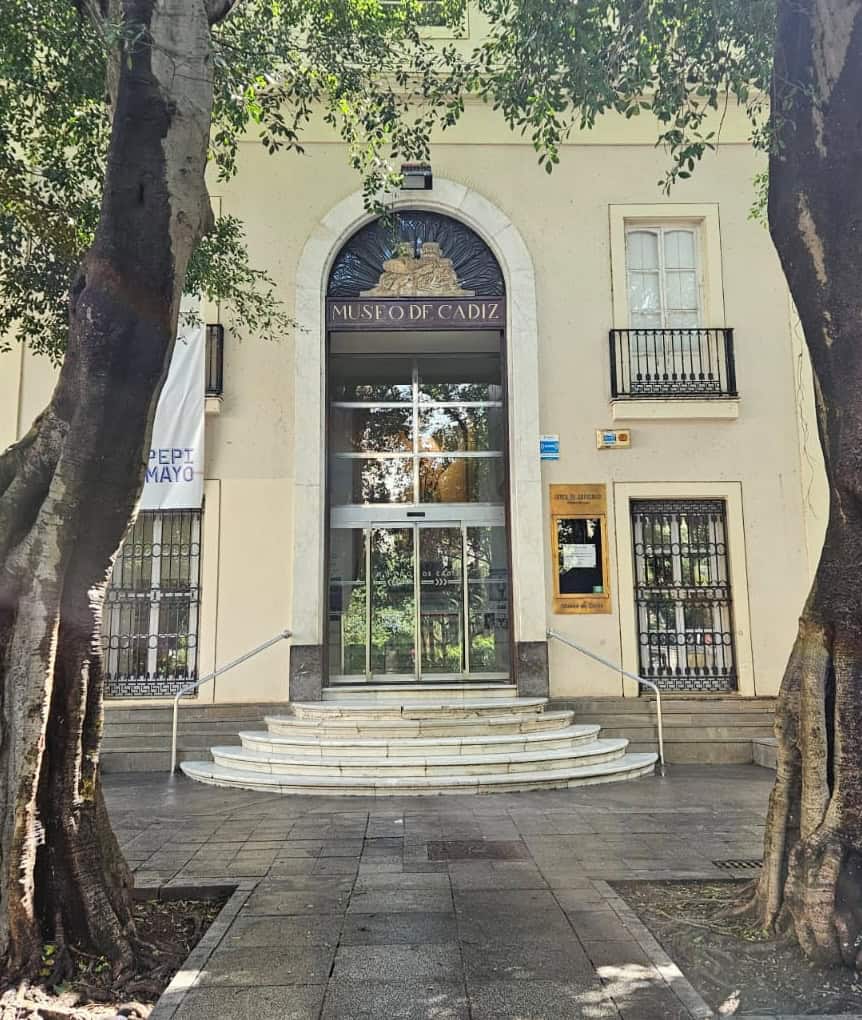
It is located in Pl. de Mina, s/n, 11004 Cádiz and it is open everyday 9:00 – 21:00 except Sundays 9:00 – 15:00 and Mondays it is closed.
✨ Ready to explore Cádiz like a local? Check out our guided walking, bike tours or Tapa & Sherry experience today!
Read next:






0 Comments