
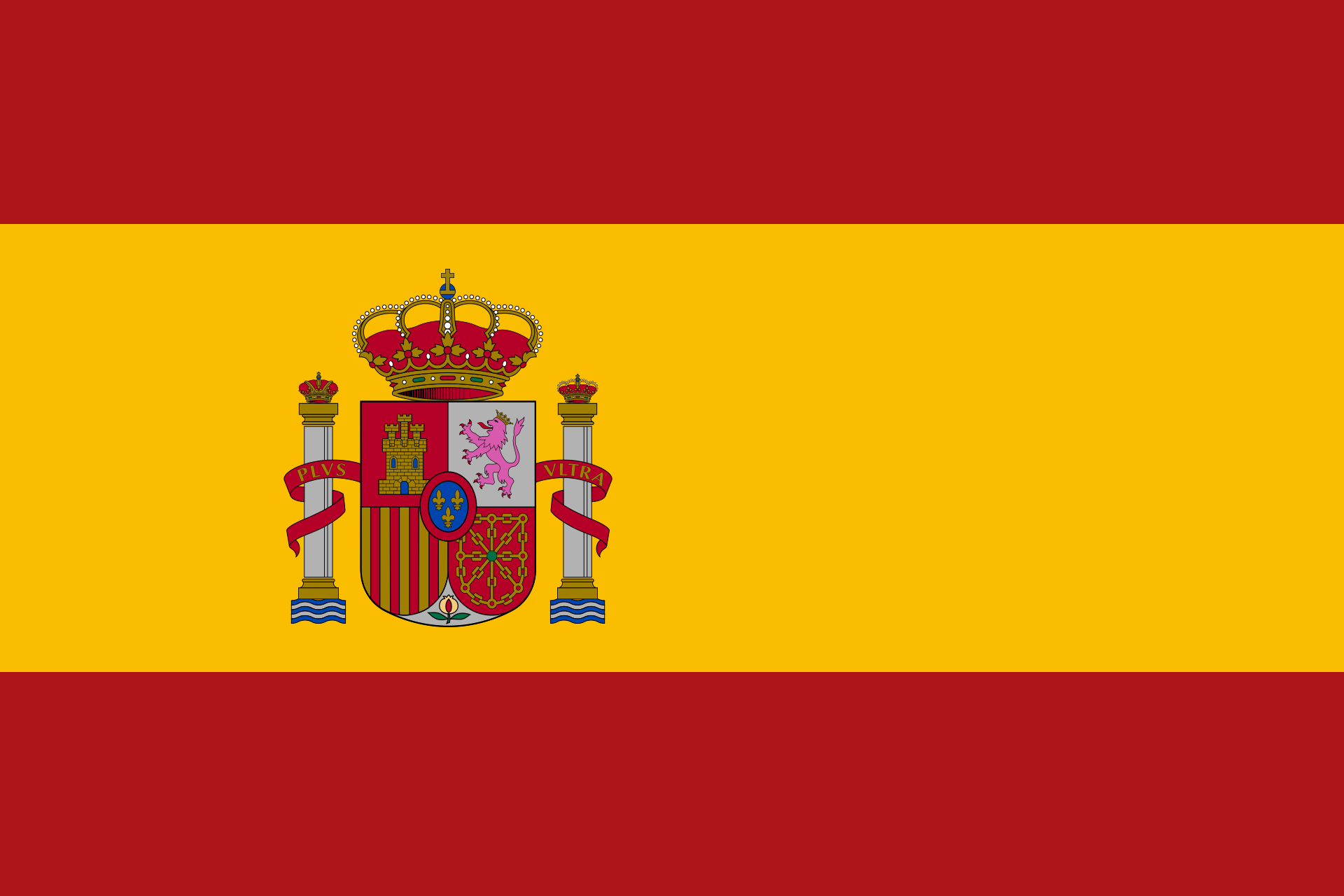
Like most things in Spain, the history behind its flag is anything but simple.
The history of the Spanish flag can be divided into two parts: the story of its colours and the story of its coat of arms. Both are every bit as elaborate as the country itself.
The familiar red and yellow colours of the Spanish flag have their own fascinating history, while the Spanish coat of arms is almost like a visual history book. Look closely, and you will discover symbols representing kingdoms, dynasties, and historical periods that shaped the long and complicated formation of the country we now call Spain.
Spain was not created overnight. For centuries, the Iberian Peninsula was divided into different kingdoms, each with its own rulers, territories, traditions, and symbols. As kingdoms expanded, united through marriage, conquered new lands, and formed political alliances, their symbols were gradually brought together.
The Spanish flag, and particularly the coat of arms displayed upon it, tells the story of these diverse kingdoms—and the journey through which they eventually came to be represented on one flag.
Part One: Why Is the Spanish Flag Red and Yellow?
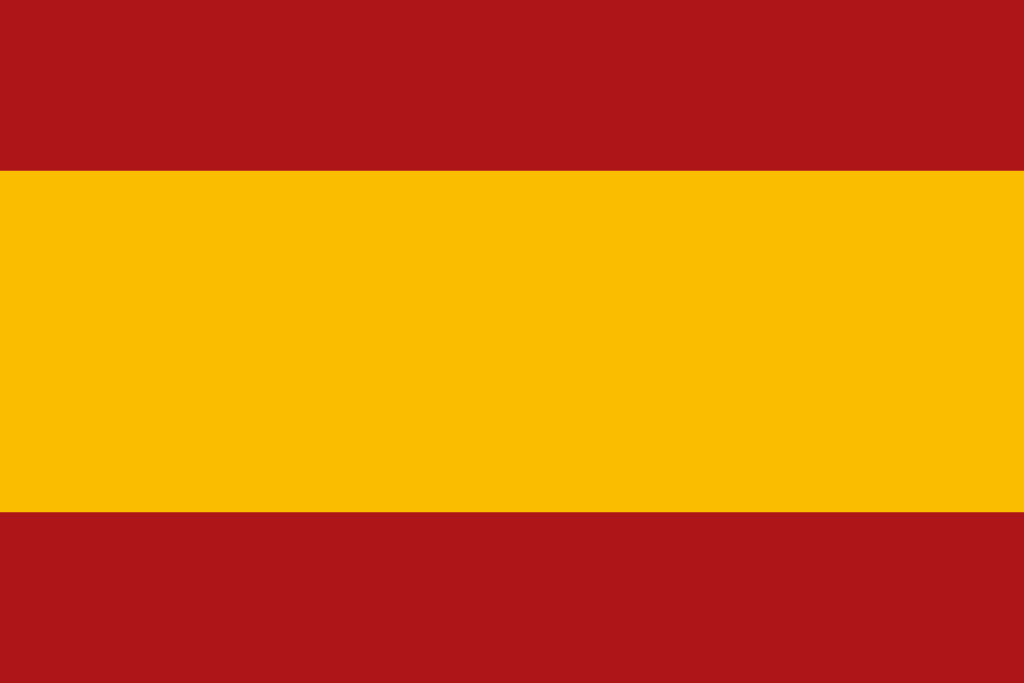
Most people assume that the colours of the Spanish flag must have some deep historical meaning. Perhaps the red represents one kingdom and the yellow another. Maybe they represent Spain’s long history, its people, or even its landscape.
But surprisingly, the red and yellow colours of the modern Spanish flag are not medieval at all.
Their story begins in 1785, with a very practical problem at sea.
At the time, Spanish naval ships flew a predominantly white flag bearing the royal coat of arms. The problem was that Spain was not the only European monarchy using a white flag. Several other naval powers sported the same style, making it difficult to distinguish friend from foe from a distance.
And when you’re looking at a ship on the horizon, realizing whether it belongs to your own navy or someone else’s is a fairly important detail!
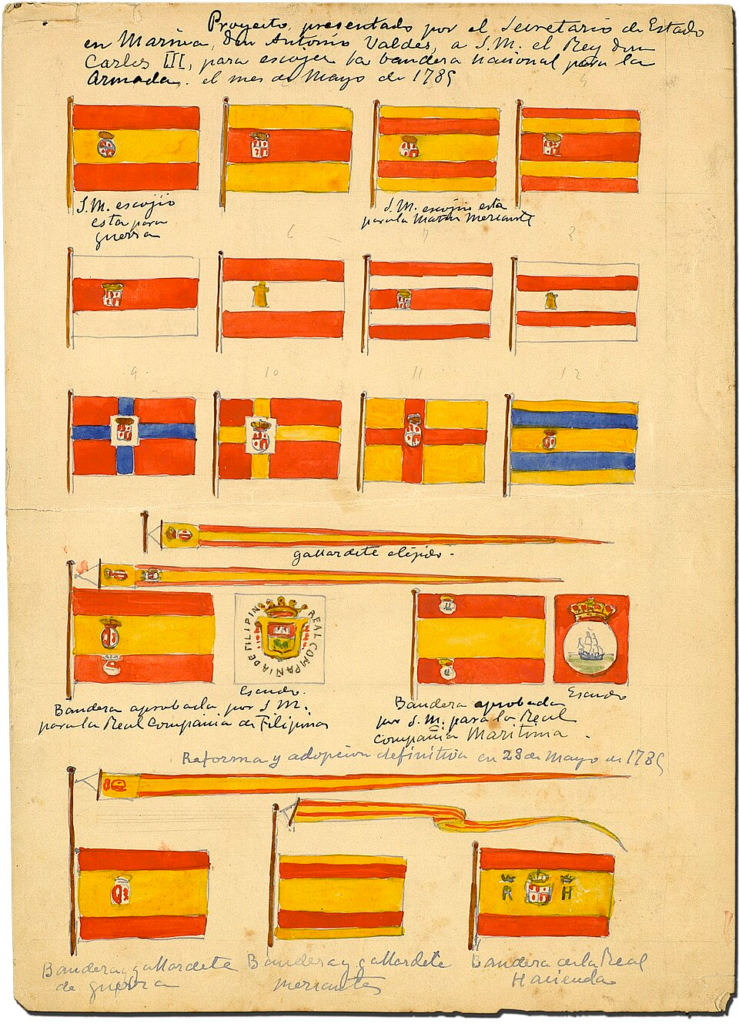
Tired of his own navy confusing its own flags for enemies, King Carlos III decided that Spain needed a flag that could be recognised more easily from a distance. He ordered a selection of new naval flag designs, and twelve proposals were presented to the king.
Among them was the now-famous design of three horizontal bands: red, yellow, and red, with the central yellow band twice the height of each red band.
The design had one major advantage: visibility, and although it’s not the official reason, at the time, red ink was an easy, cheap, and accessible colour.
The strong colours and broad horizontal bands made the flag much easier to distinguish at sea, particularly from a great distance. For a navy operating across the Mediterranean and Atlantic, that was far more important than creating a flag with complicated symbolism.
Carlos III selected the design, and in 1785 it became the flag of the Spanish navy.
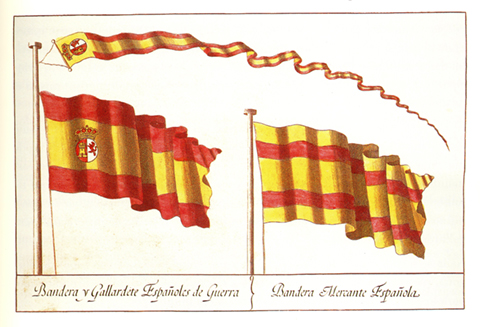
For the next several decades, however, this was primarily a military and naval flag rather than the national flag we know today.
It wasn’t until 1843, during the reign of Isabella II, that the red-and-yellow flag was officially adopted as the national flag of Spain, bringing a design that had originally been created for Spanish ships into wider national life.
So, contrary to what many people assume, the red and yellow stripes were not originally designed to represent two ancient Spanish kingdoms. They were designed to solve a problem.
But this is only half of the tale: while the colours tell us how Spain got its flag, the symbols tell us how Spain got its story.
Part Two: The Symbols That Built Spain
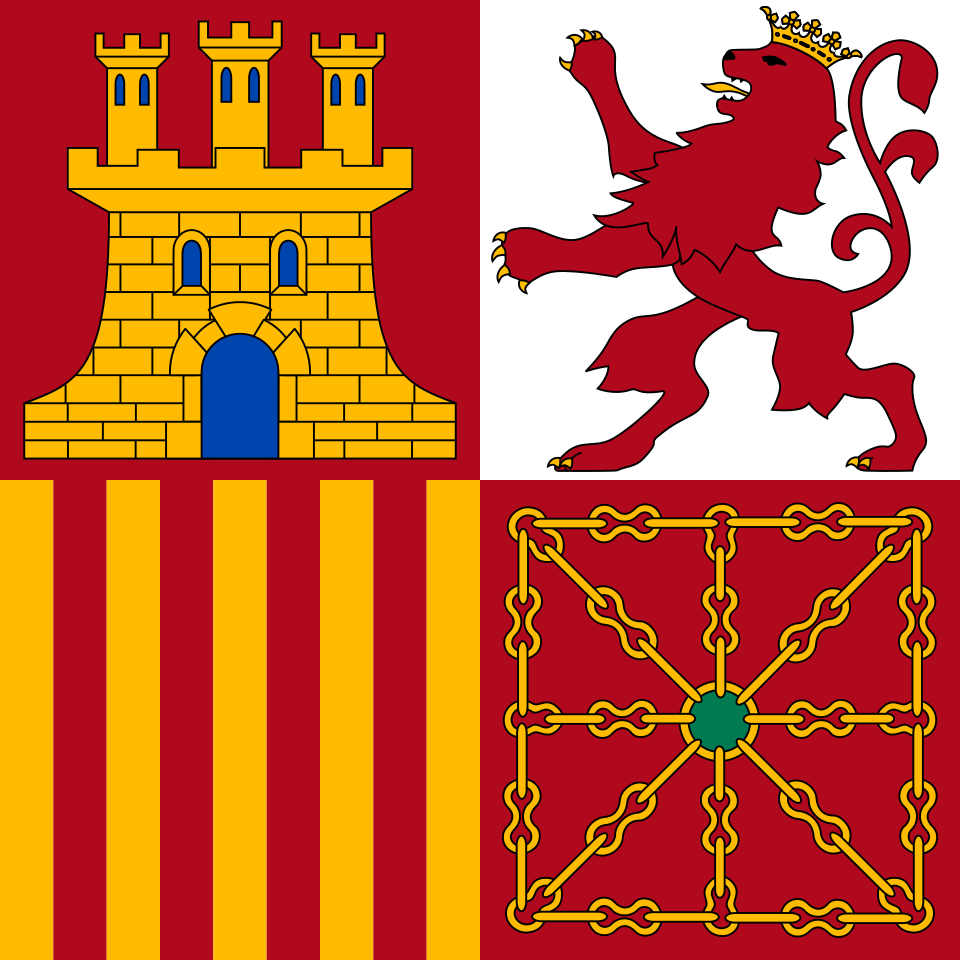
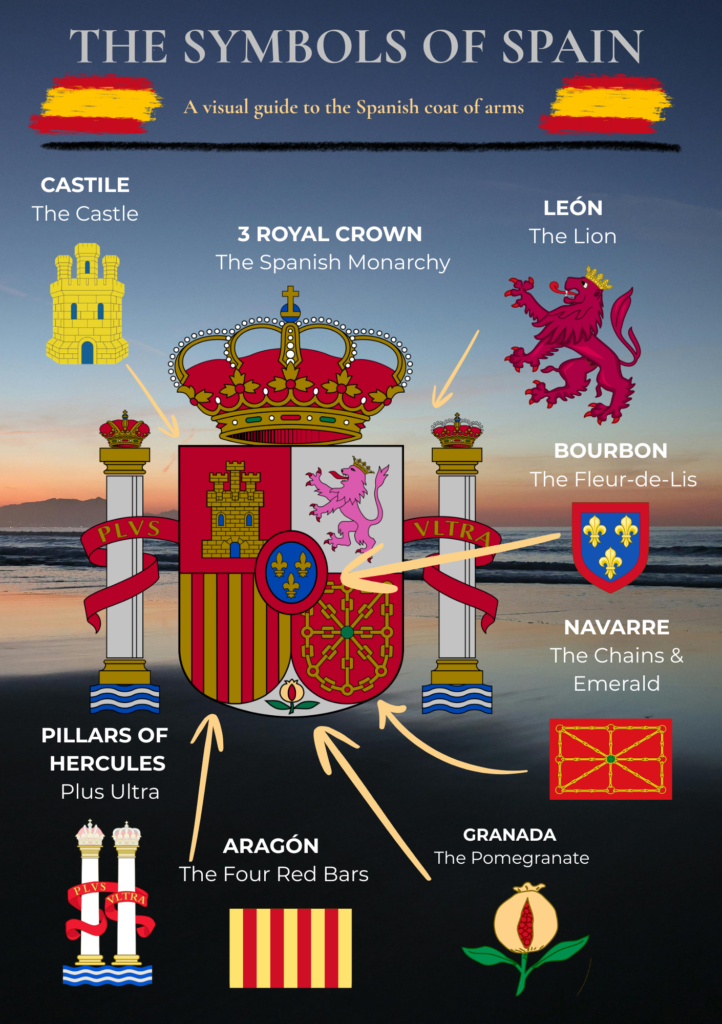
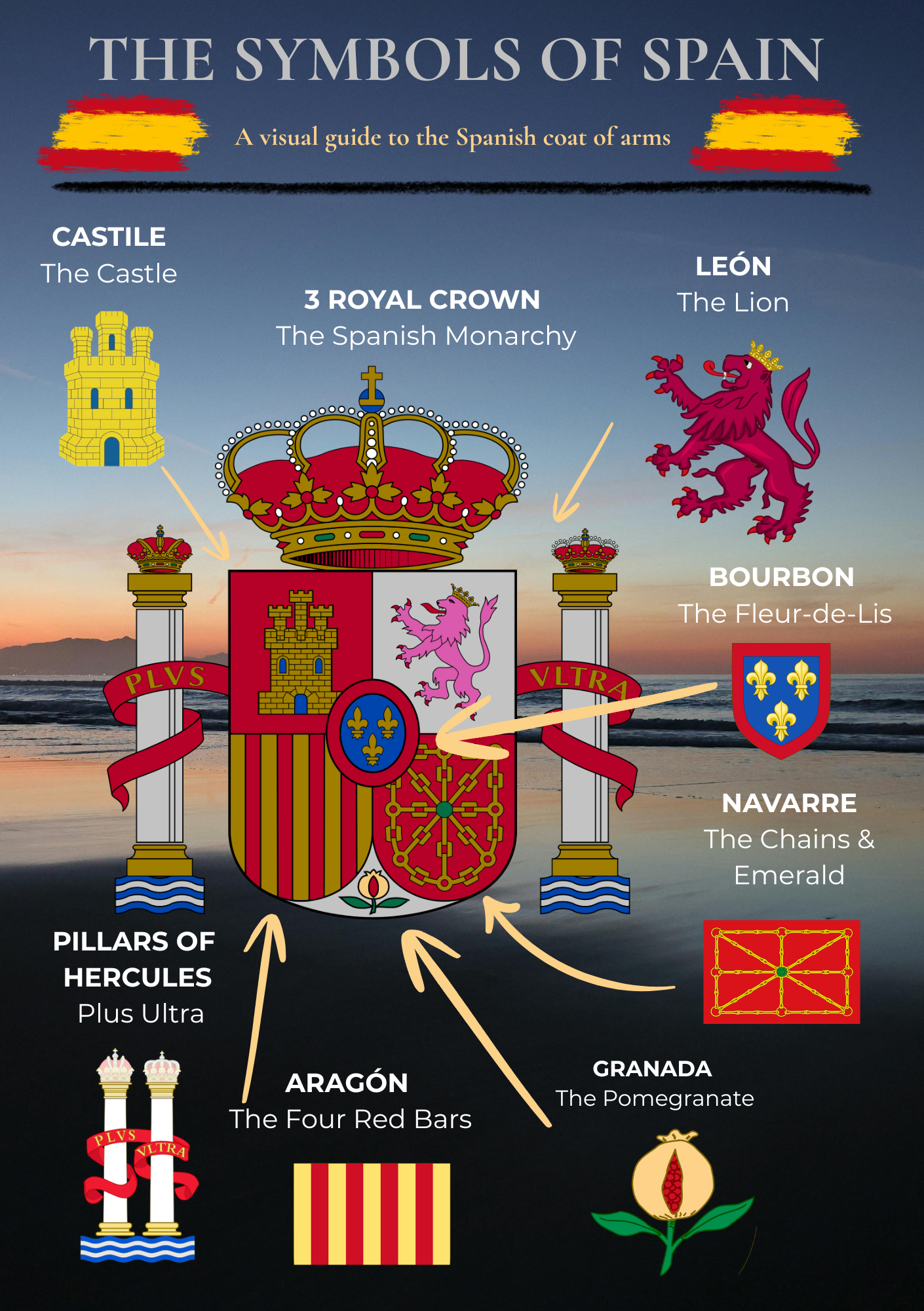
One of the oldest symbols represented in Spain’s coat of arms is the lion of the Kingdom of León. The kingdom became associated with a magnificent purple lion, traditionally shown wearing a royal crown. It is considered one of the oldest heraldic symbols in Europe.
The Kingdom of León: The Lion
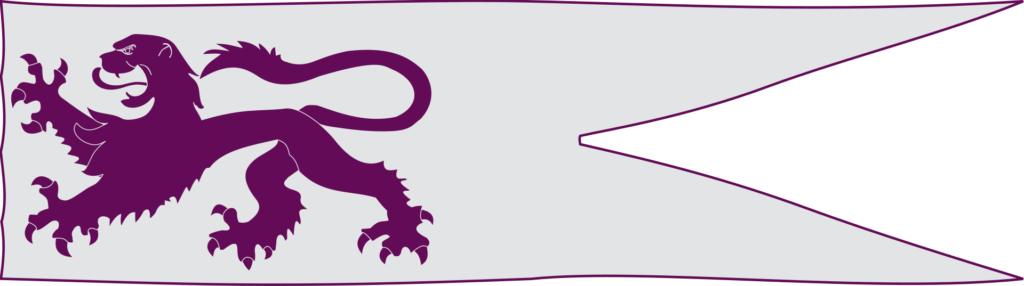
But the story of León goes back much further than the medieval kingdom itself.
The name León is believed to have its roots in the Roman period. The Romans established an important military settlement here, known as Legio, because of the legions stationed in the area. The Legio VI Victrix was based here before being replaced by the Legio VII Gemina, which established a permanent headquarters in the region during the 1st century AD.
Over the centuries, the Roman name Legio evolved into the name we know today as León. When Christian rulers took control of the territory during the Middle Ages, the ancient name remained, eventually becoming the name of one of the most powerful Christian kingdoms of medieval Iberia.
And then there was the lion.
During the 12th century, under the reign of Alfonso VII, the lion began appearing as a royal emblem associated with the Kingdom of León. Over time, it became firmly established as the symbol of the kingdom and its monarchs.
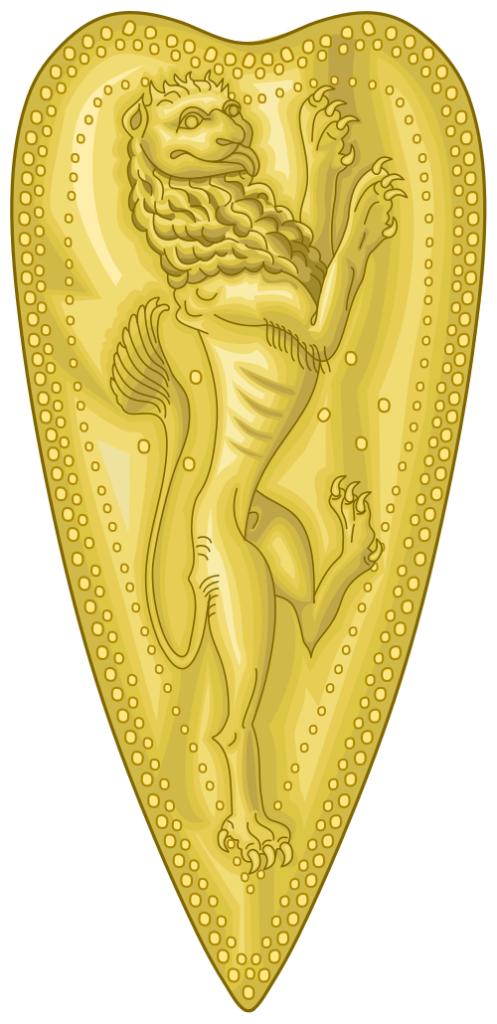
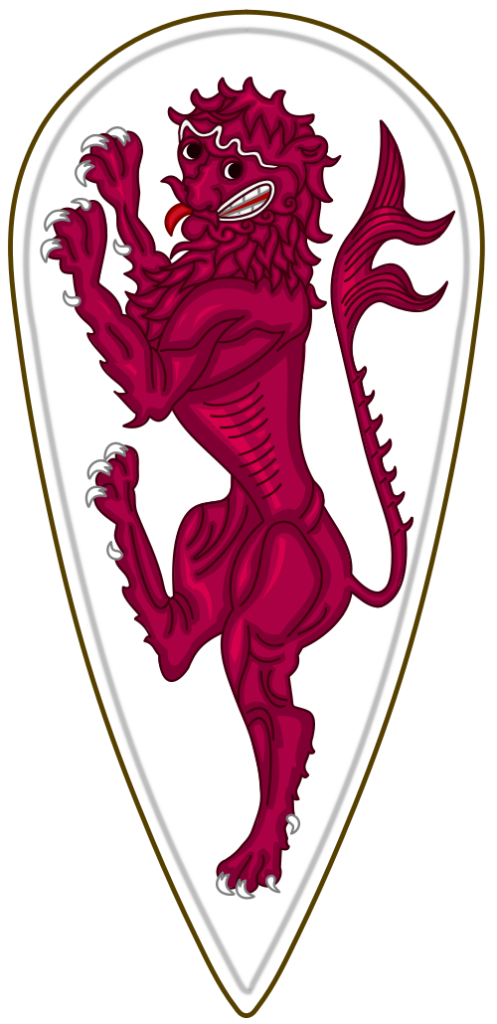
The lion represented strength, courage, and royalty—qualities closely associated with medieval monarchy. Its distinctive purple colouring, known in heraldry as purpure, also carried associations with prestige and royal authority.
The Kingdom of León became one of the most important Christian kingdoms of the Iberian Peninsula. But eventually the borders became intertwined with those of its neighbours.
And one neighbour in particular would become impossible to separate from its history: Castile.
The Kingdom of Castile: The Castle
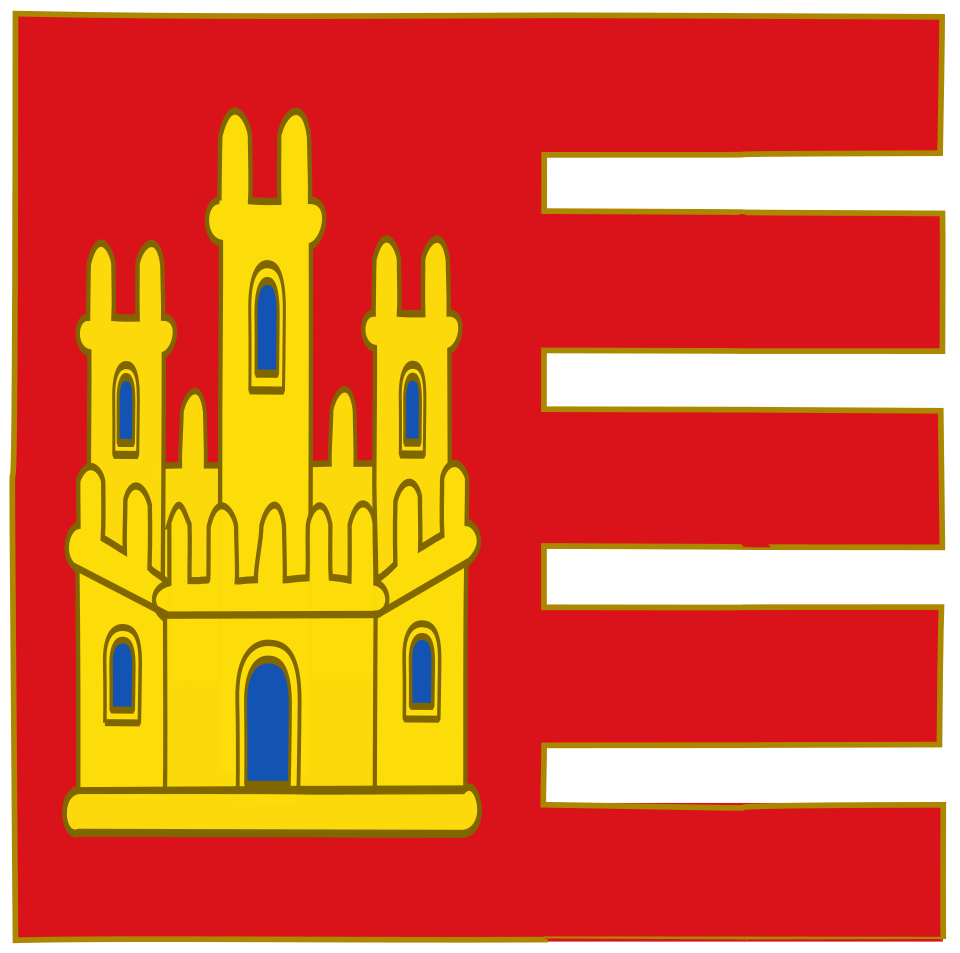
If León had its lion, Castile had its castle.
The name Castile itself is closely associated with the large number of castles and fortified strongholds that dominated the region during the Middle Ages. These fortifications were particularly important along the frontier between the Christian kingdoms of the north and the Muslim territories to the south.
The symbol was wonderfully straightforward: a golden castle on a red background.
In medieval Europe, heraldic symbols were a way of communicating identity visually. You didn’t necessarily need to read a name to understand who a shield belonged to (this was handy, as most of the population could not read). The castle immediately evoked Castile and its fortified landscape.
But the castle represented more than simply the name of the kingdom. It came to embody ideas of strength, protection, defence, and royal authority.
Castile would become one of the most powerful Christian kingdoms on the Iberian Peninsula, playing a major role in the centuries-long Christian expansion southwards that we now call the Reconquista.
A big step forward for the Christian kingdoms took place in 1230, when the two kingdoms of León and Castile became united under one monarch.
King Fernando III, known as Fernando III el Santo—Fernando III the Saint—became ruler of both Castile and León, permanently uniting the two crowns under a single monarch.
And their symbols were united too.
The arms of Castile and León were combined into a quartered shield, with the castle and lion alternating across the four sections. The two kingdoms were now represented together on the same coat of arms.
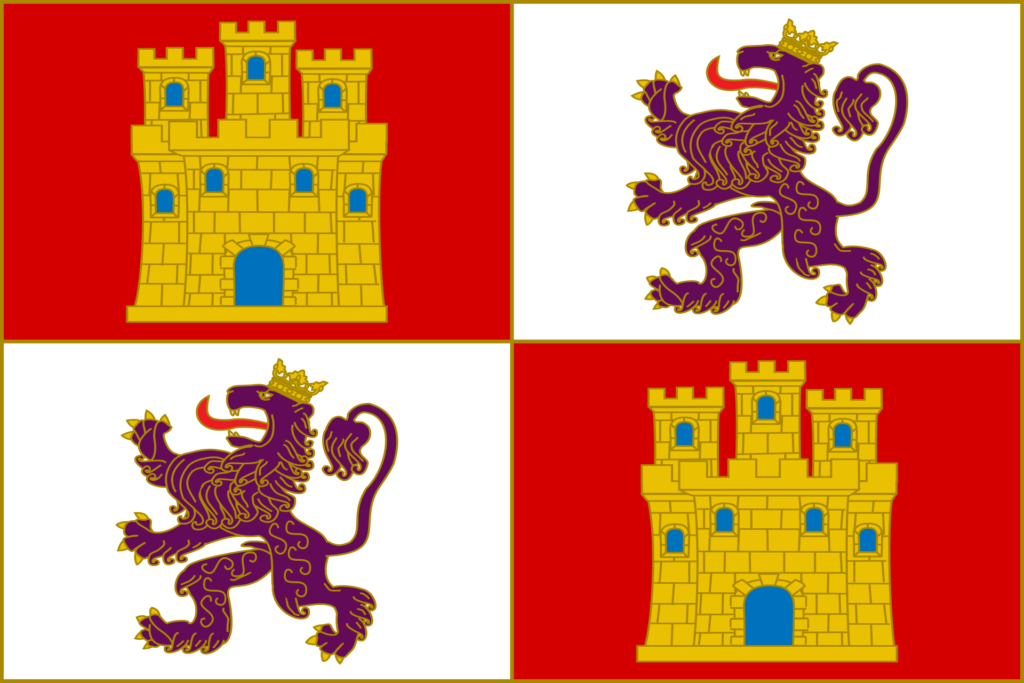
This was an important moment in the visual history of Spain.
The lion of León and the castle of Castile were no longer simply symbols of two separate kingdoms. Together, they became part of a growing heraldic tradition that would continue to expand as other territories came under the same monarchy.
The Crown of Aragón: The Legend of the Four Blood Bars
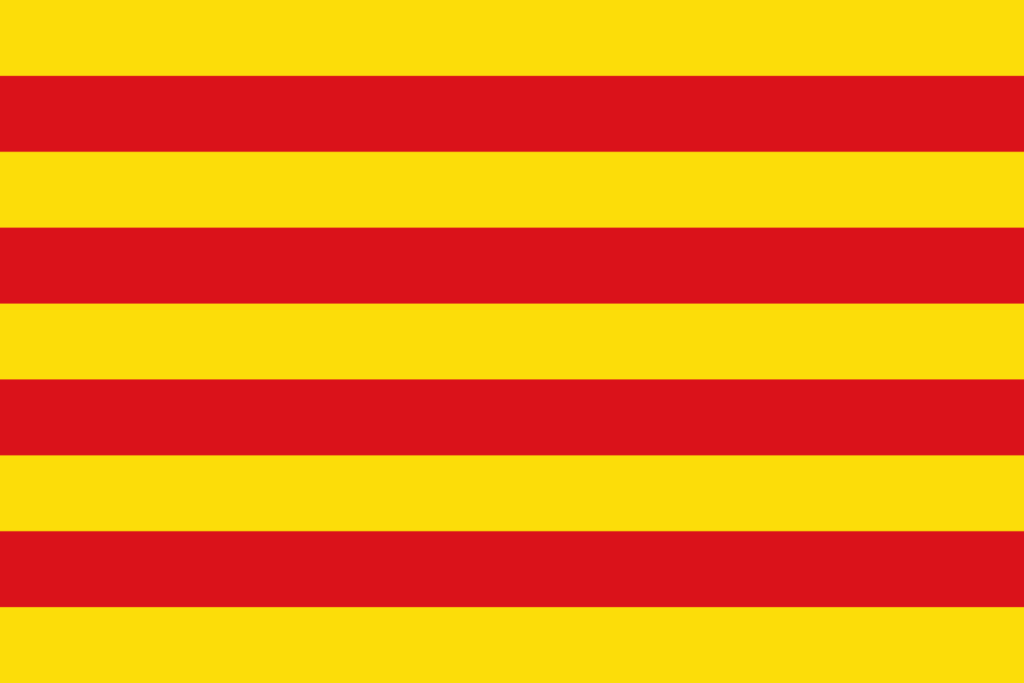
Aragón’s contribution to the Spanish coat of arms is impossible to miss: a golden shield marked by four vertical red bars.
Today, these distinctive red and gold stripes are among the most recognisable symbols associated with the former Crown of Aragón. Over the centuries, the symbol spread across the Mediterranean as the Crown of Aragón expanded its influence and territories. The four red bars became associated with a vast collection of lands, including Aragón, Catalonia, Valencia, the Balearic Islands, Sardinia, and Sicily.
One of the most famous legends surrounding the four red bars is the story of the “Shield with the Four Blood Lines.” It tells of Wilfred the Hairy, a powerful Count of Barcelona, who, according to legend, fought bravely alongside the Frankish emperor against the Normans.
During the battle, Wilfred was badly wounded. After the victory, the emperor approached the injured count and saw his golden shield, supposedly still completely plain. He dipped four fingers into the blood from Wilfred’s wounds and dragged them across the shield, creating four bloody lines.
According to the legend, the emperor declared that these four lines would become Wilfred’s coat of arms.
From that moment, the four red bars on a golden background were supposedly born.
It’s a pretty epic story. Unfortunately for the romantics among us, there is absolutely no historical evidence that it actually happened.
The legend itself did not appear until centuries later, with one of its earliest known written versions appearing in the 16th century. By that time, the four red bars had already been associated with the Crown of Aragón for generations.
The true origins of the symbol are much less dramatic, and historians still debate aspects of its early history. What we do know is that the red-and-gold arms became firmly associated with the rulers of the Crown of Aragón and eventually spread throughout their Mediterranean territories.
In 1469, the marriage of Isabella I of Castile and Ferdinand II of Aragón brought together two of the most powerful crowns on the Iberian Peninsula. A step forward in the creation of Spain and the ever-evolving Spanish crest.
The Pomegranate: The Conquest of Granada

By 1492, the Catholic Monarchs, Isabella I of Castile and Ferdinand II of Aragón, had achieved what had been one of the defining ambitions of their reign: the conquest of the Nasrid Kingdom of Granada, the last major Muslim-ruled kingdom on the Iberian Peninsula.
The campaign was long and bloody. The Granada War lasted from 1482 until 1492, nearly ten years of military campaigns, sieges, shifting alliances, and battles. Slowly, the Catholic Monarchs pushed further into Nasrid territory until Granada itself was left standing as the final prize.
Finally, on 2 January 1492, its ruler, Muhammad XII, better known to history as Boabdil, the last Nasrid Sultan of Granada, surrendered the city to Isabella and Fernando, handing over the keys to Granada. The Catholic Monarchs entered the city, marking the end of the Nasrid Kingdom and a major turning point in the history of the Iberian Peninsula. The fall of Granada brought an end to the last Muslim-ruled kingdom on the peninsula and became one of the most significant moments in the reign of the Catholic Monarchs. To mark this triumph, the pomegranate was added to Spain’s crest.
Why a Pomegranate?
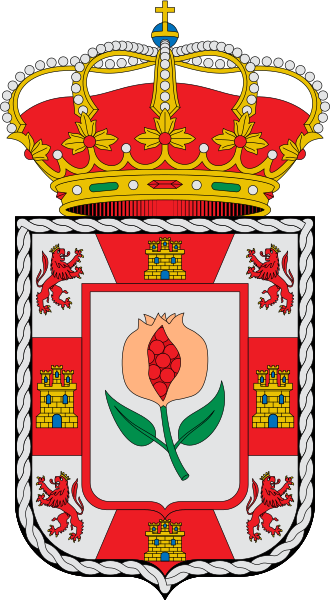
The pomegranate, or granada in Spanish, had long been associated with the Kingdom and city of Granada. Like the castle of Castile and the lion of León, it was a visual symbol connected directly to the name of the territory.
The fruit was also well suited to represent Granada. Pomegranates have been cultivated throughout the Mediterranean for thousands of years and thrive in southern Spain.
Following the conquest of Granada, the Catholic Monarchs added the pomegranate to their coat of arms.
Unlike the castle, lion, bars, and chains—which represented the older kingdoms that made up the monarchy—the pomegranate was placed at the bottom of the shield.
Small compared with the other symbols, perhaps.
But its meaning was enormous.
It represented the final conquest of the Kingdom of Granada and the end of the last Muslim-ruled kingdom on the Iberian Peninsula.
The Kingdom of Navarre: The Chains and the Emerald
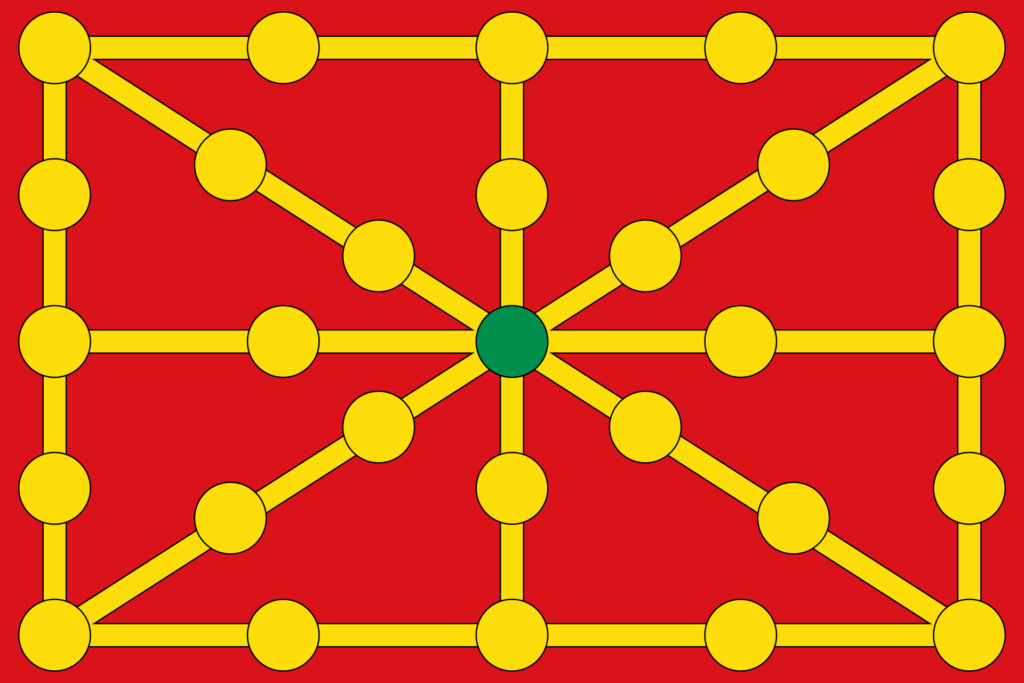
The contribution of the Kingdom of Navarre to Spain’s coat of arms is one of its most distinctive symbols: golden chains arranged across a vivid red background, surrounding a green emerald at the centre.
For Navarre, this coat of arms represents far more than decoration. It has long been a powerful symbol of the sovereignty and historical identity of the ancient Kingdom of Navarre and remains an important emblem of the modern Comunidad Foral de Navarra.
In heraldic language, the background is described as a field of gules, simply meaning a bright, vivid red.
But where did the chains come from?
A Symbol Wrapped in Legend
The earliest known versions of Navarre’s coat of arms appeared during the reign of Theobald I of Navarre, who became king in 1234.
Theobald was a fascinating figure in his own right. Born Theobald IV, Count of Champagne, he inherited the Kingdom of Navarre and became its king following the death of Sancho VII.
However, by the 15th century, a much more dramatic story had developed around the symbol of the chains.
According to legend, the chains represented an extraordinary moment during the Battle of Las Navas de Tolosa in 1212.
During this famous battle, Sancho VII of Navarre and his cavalry supposedly charged through the chains surrounding the camp of the Almohad Caliph, breaking through the defensive barrier formed by his guards.
According to the story, Sancho’s forces captured a magnificent emerald from the enemy camp.
The chains became the symbol of the battle. And the emerald found its place at their centre.
It is an incredible story—but, as with many of Spain’s best historical legends, the reality is a little more complicated.
While Sancho VII certainly fought at Las Navas de Tolosa, historians debate the extent to which the famous chains and emerald story reflects what actually happened. The connection between Navarre’s coat of arms and the battle appears to have developed and become firmly established later.
What we do know is that the chains became one of the defining symbols of the Kingdom of Navarre.
Navarre Joins the Growing Spanish Monarchy
Unlike Castile and Aragón, the incorporation of Navarre into the growing Spanish monarchy came through war rather than marriage.
In 1512, Ferdinand II of Aragón ordered the invasion of the Kingdom of Navarre. Spanish forces captured much of the kingdom south of the Pyrenees, and the territory was gradually incorporated into the Crown of Castile.
The story, however, did not end immediately.
The conquest of Navarre continued through a series of military campaigns, with attempts to recover the kingdom and conflicts continuing for years. By the early 16th century, Upper Navarre, the territory south of the Pyrenees, had become incorporated into the Spanish monarchy.
The northern part of the historic Kingdom of Navarre, however, remained outside Spanish control and eventually became associated with France.
The chains of Navarre were eventually incorporated into the evolving heraldry of the Spanish monarchy.
And so, another kingdom found its place on Spain’s coat of arms.
The Bourbon Dynasty: The Drama
It would be another two centuries before the Spanish coat of arms underwent another major change.
And this time, it came with a distinctly French flair. In 1700, Spain’s last Habsburg king, Charles II, died without an heir. His death created a succession crisis that would quickly become one of the biggest political problems in Europe.
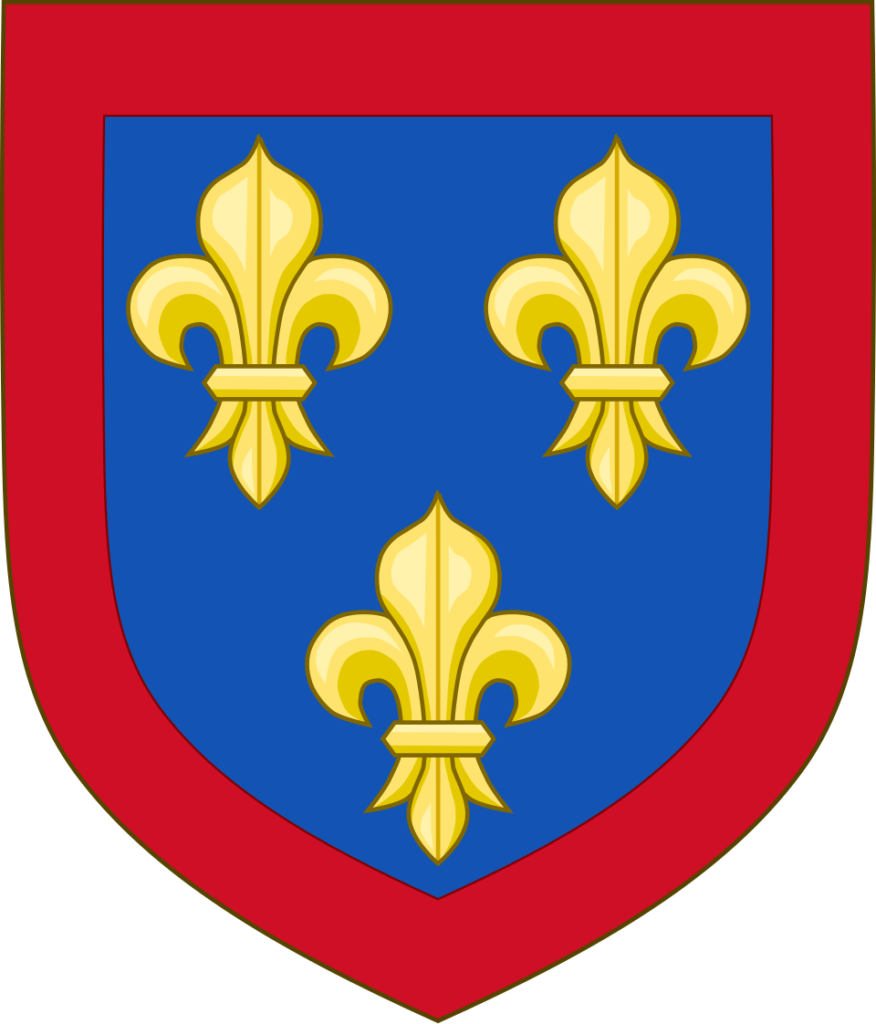
The man chosen to inherit the Spanish throne was Philip of Anjou, the grandson of King Louis XIV of France. Philip became Philip V of Spain, the first Bourbon king of Spain and the founder of the Spanish branch of the House of Bourbon.
Naturally, a new dynasty needed its place on the country’s growing coat of arms. And so, a new symbol appeared right in the centre of the shield.
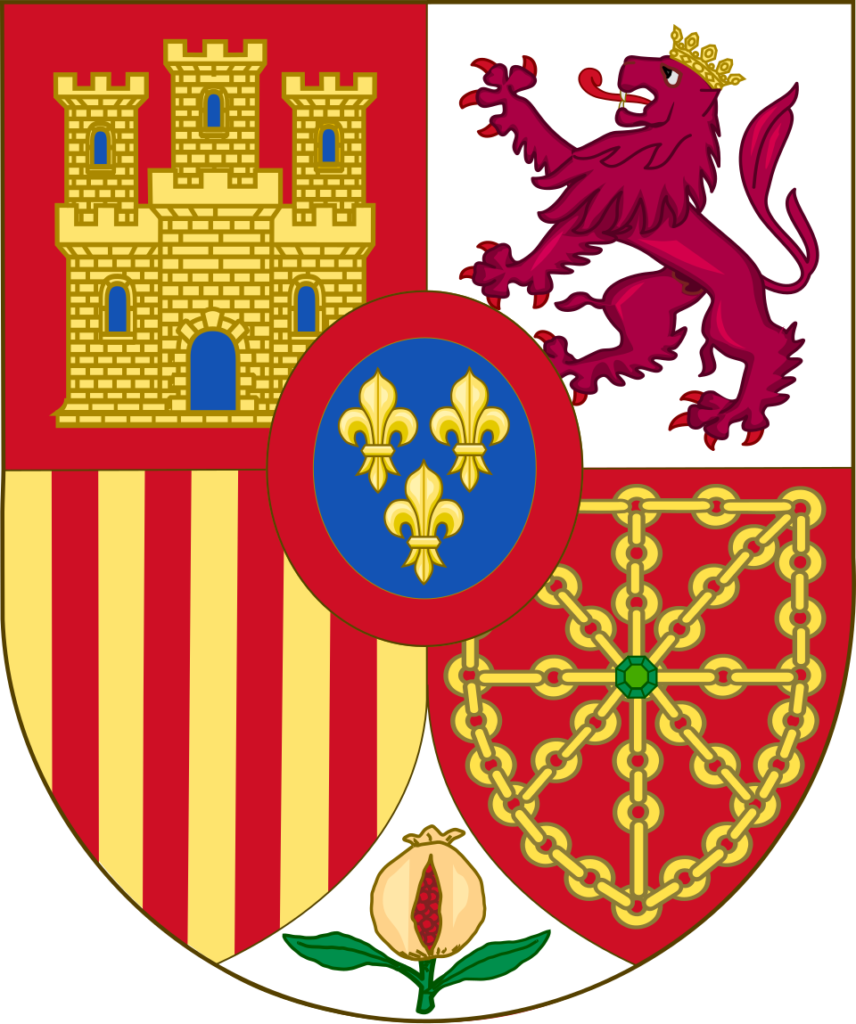
Look closely at the Spanish coat of arms today, and you will see a small shield placed directly in its centre. This is known in heraldry as an inescutcheon (basically a shield within a shield).
Inside it are three golden fleurs-de-lis on a blue background, the traditional symbol of the Bourbon dynasty. And remarkably, it remains there today.
More than three hundred years after Philip V first became king, the fleur-de-lis still provides a direct visual connection between Spain’s modern monarchy and the Bourbon dynasty that arrived from France in 1700.
But there was one small problem.
Europe absolutely freaked out: A French Bourbon prince sitting on the Spanish throne created a terrifying possibility for Spain’s European rivals.
What if Philip eventually inherited the French throne as well?
Suddenly, the enormous French and Spanish empires could potentially be controlled by the same monarch. For countries such as Britain, the Dutch Republic, and the Austrian Habsburgs, this was not a situation they were willing to accept. And so war was declared, and the War of the Spanish Succession began.
From 1701 until 1714, Europe was dragged into a massive conflict over one simple question: Who should rule Spain? The war eventually ended (after thousands perished) with the international agreements known collectively as the Peace of Utrecht. Philip V was allowed to remain King of Spain. But he had to formally renounce his rights and those of his descendants to the French throne. France and Spain could never be united under the same monarch.
And so, the Bourbon dynasty remained in Spain.
Along with three small golden fleurs-de-lis, quietly sitting in the centre of the Spanish coat of arms and reminding us of the moment when one French prince caused all of Europe to go to war.
The Pillars of Hercules: Spain’s Mythical Addition
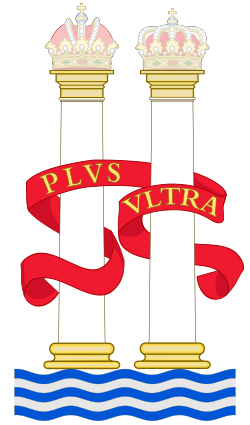
The addition of the Pillars of Hercules is a shout-out to Spain’s ancestors and the mythology of ancient times.
So, why the pillars?
According to Greek and Roman mythology, Hercules was given twelve great labours. During one of these adventures, he travelled to the western edge of the known world. There, according to legend, Hercules created the passage between the Mediterranean Sea and the Atlantic Ocean.
On either side of this narrow passage stood two great landmarks, known as the Pillars of Hercules. Today, we know this passage as the Strait of Gibraltar.
For the ancient Greeks and Romans, the Pillars of Hercules represented the end of the known world.
Centuries later, Spain sailed across the Atlantic, going beyond the boundaries of the known world.
In the early 16th century, King Charles I of Spain, who was also the Holy Roman Emperor Charles V, adopted the Pillars of Hercules as part of his personal emblem, or impresa.
But Charles added something that completely changed their meaning. Wrapped around the pillars was the Latin motto:
PLUS ULTRA
Or:
Further Beyond.
The Pillars and the motto Plus Ultra became closely connected with Spain’s growing overseas empire and the Age of Exploration.
And they remain on Spain’s coat of arms today.
Following Spain’s transition to democracy, the modern version of the national coat of arms was officially adopted on 18 December 1981, retaining the two Pillars of Hercules and the famous motto Plus Ultra.
The Crown That Sits Atop It All
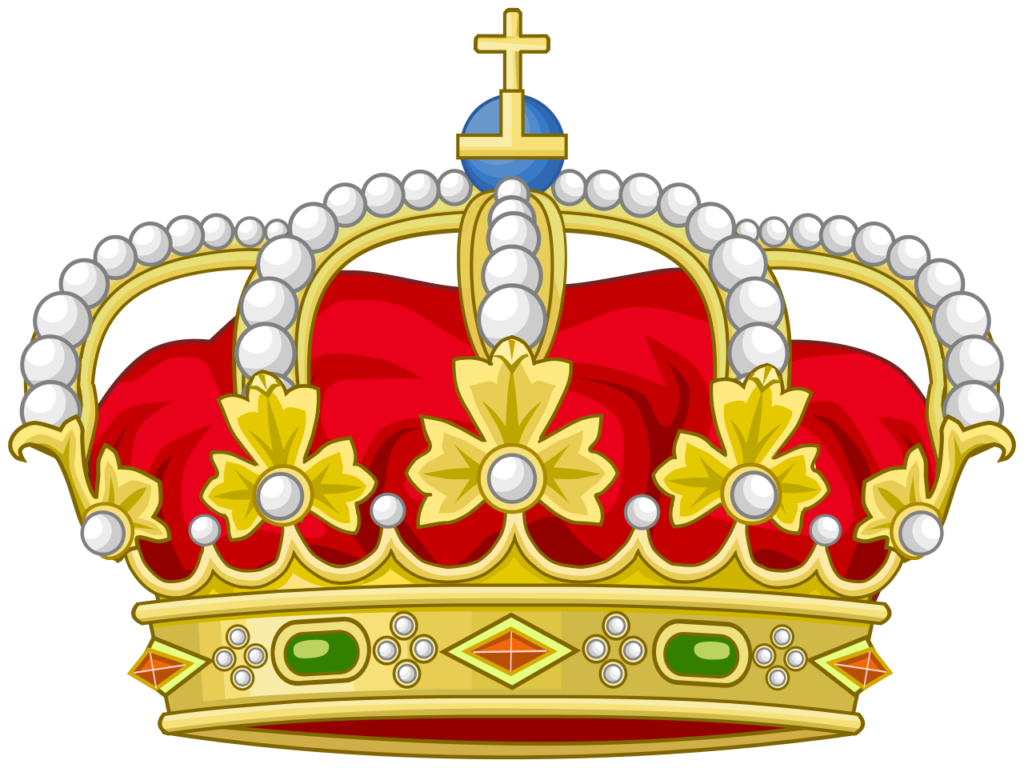
Last but not least, there are three crowns in the coat of arms displayed on the Spanish flag: one large crown sitting above the shield containing the symbols of the historic kingdoms, and two smaller crowns sitting on top of the Pillars of Hercules.
The large crown is known as the Royal Crown of Spain. Sitting above the shield, it represents the monarchy and the sovereignty of the Spanish Crown.
The two smaller crowns placed above the Pillars of Hercules are also royal crowns, reinforcing the connection between the symbols and the authority of the Spanish monarchy.
While crowns have appeared in Spanish royal heraldry for centuries, the modern version of the Spanish coat of arms brings these symbols together as part of the visual identity of the Spanish state.
Following Spain’s transition to democracy, the current version of the national coat of arms was officially adopted on 18 December 1981.
And so, sitting above the castles, lions, chains, pomegranate, fleurs-de-lis, and the Pillars of Hercules are three crowns.
A fitting final symbol.
Because while every section of the shield tells the story of a different kingdom, dynasty, conquest, or legend, the crowns remind us of what eventually brought them all together:
the Spanish Crown.
The Eagle: A Symbol Spain Left Behind
There is one final symbol worth mentioning.
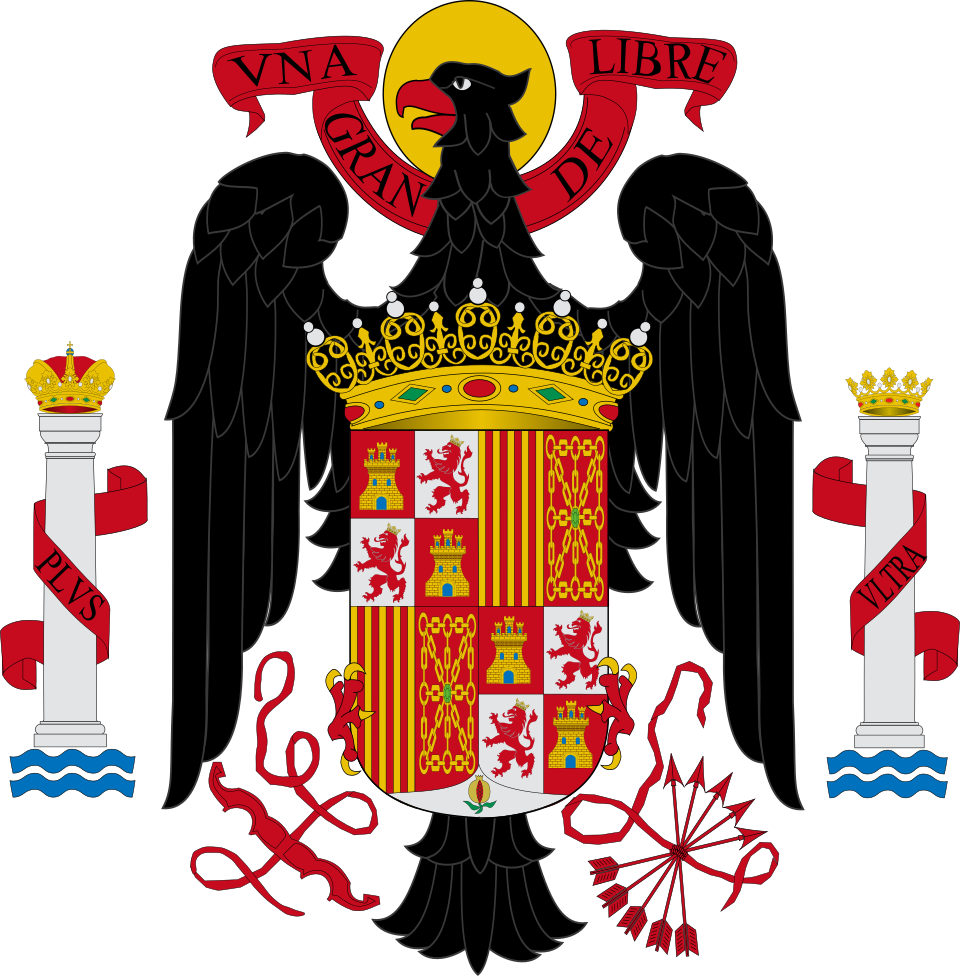
If you have ever seen an older Spanish flag featuring a large eagle behind the coat of arms, you may be looking at one of the most politically controversial versions of Spain’s national symbol.
The eagle became closely associated with Francisco Franco’s dictatorship, appearing on the Spanish coat of arms and flag during his rule from 1939 until 1975.
But the eagle itself was not originally Franco’s.
In fact, Franco borrowed the symbol from one of Spain’s most famous—and powerful—historical figures: Isabella I of Castile, better known as Isabella the Catholic.
The eagle was known as the Eagle of Saint John.
Isabella adopted the symbol because Saint John the Evangelist held particular importance within the religious imagery surrounding the Catholic Monarchs. The Eagle of Saint John became part of the heraldic imagery associated with Isabella and, later, the Catholic Monarchs.
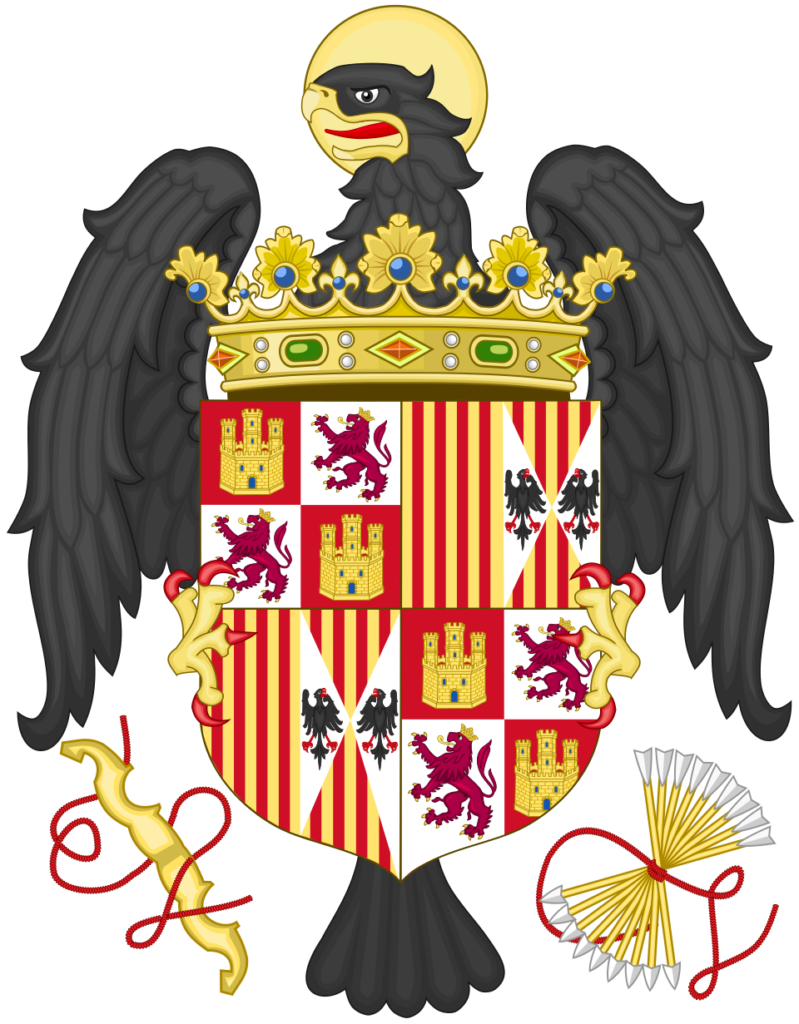
Centuries later, Franco revived the eagle.
By incorporating symbols associated with the Catholic Monarchs into his regime’s imagery, Franco connected his dictatorship to a carefully selected version of Spain’s past—one built around ideas of a powerful, united, Catholic Spain.
The eagle therefore became one of the most recognisable symbols of Francoist Spain.
And this is where the history of the Spanish flag becomes particularly interesting.
Because symbols can change meaning.
The same eagle that had once represented the Catholic Monarchs became, centuries later, strongly associated with one of the most controversial periods in modern Spanish history.
A New Spain, A New Flag
After Franco died in 1975, Spain began its transition from dictatorship to democracy.
The country needed to build a new political identity.
And eventually, the eagle disappeared.
The modern Spanish coat of arms was officially adopted in 1981, removing the Eagle of Saint John and replacing the Franco-era design with the coat of arms used on Spain’s flag today.
The castle.
The lion.
The red and gold bars of Aragón.
The chains of Navarre.
The pomegranate of Granada.
The Bourbon fleur-de-lis.
The Pillars of Hercules.
And the royal crown.
The eagle was gone.
And perhaps that is the perfect final lesson in the history of the Spanish flag.
A flag is never just a piece of fabric.
It is a collection of stories.
Some are thousands of years old.
Some are legends.
Some are victories.
Some are conquests.
And some are reminders of chapters a country has chosen to leave behind.
Spain’s flag is all of those things.
You just have to know where to look.


0 Comments